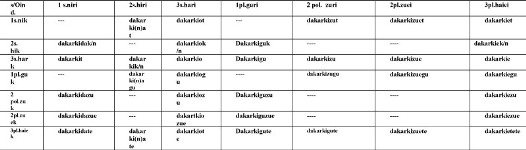
ჩვენი ნაშრომი „ბასკური და ქართველური დესტინაციური სისტემების ტიპოლოგია“ ეხება ამ ენათა დესტინაციურ სისტემებს და მათ დახასიათებას ტიპოლოგიური ასპექტით. საერთოდ ლინგვისტიკაში და, განსაკუთრებით, თანამედროვე ენათმეცნიერებაში კამათს არ იწვევს ტიპოლოგიური ძიებების აქტუალობა. (ვ.ალპატოვი, 1998; ჯ.გრინბერგი, 1970; მ.გუხმანი, 1981; 1974; ნ.ჩომსკი, 1972; ვ.ჟირმუნსკი 1977; ვ.ივანოვი, 1958; ს.კაცნელსონი, 1972; 1986; გ.კლიმოვი, 1977; 1975; 1983; ვ.პანფილოვი, 1974; სხვადასხვა წყობის ენათა ტიპოლოგიური ანალიზის პრინციპები, 1972; ე.სეპირი, 1993; ბ.სერებრენიკოვი, 1972; ვ.სკალიჩკა 1963; ენათა სტრუქტურული ტიპოლოგია, 1962; ი.სუსოვი, 1999; უნივერსალიები და ტიპოლოგიური კვლევანი, 1974; ბ.პეეტერსი, 1995).
ამ თუ იმ საკითხის ტიპოლოგიური კვლევა, უპირველეს ყოვლისა, გულისხმობს საკვლევი ობიექტის მრავალმხრივ ანალიზს და შემდგომ კი შესაბამისი დასკვნების განზოგადებას. წარმოდგენილ ნაშრომში პირველად არის განხილული დესტინაციური ტიპოლოგიური სისტემები, მოცემულია კატეგორიათაშორისი მიმართებები და ერგატიულ სისტემათა დესტინაციური მოდელები. პოლიპერსონალური ენების კონკრეტულ კატეგორიათა მორფო-სემანტიკური მოდელების გამოვლენა და მათი გააზრება უნივერსალური პარამეტრებით, რა თქმა უნდა, ერთობ აქტუალურია თანამედროვე ენათმეცნიერებისათვის.
წარმოდგენილი ნაშრომის მიზანია ბასკური და ქართული დესტინაციური სისტემების სინქრონიული ანალიზი და ტიპოლოგიური დახასიათება, ზოგადი და უნივერსალური კანონზომიერებების გამოვლენა ამ კატეგორიის ფარგლებში ტიპოლოგიური კვლევის მეთოდებით.
ლინგვისტური ტიპოლოგია არის ზოგადი ენათმეცნიერების დარგი ანუ ენათმეცნიერულ კვლევათა მიმართულება, რომლის ძირითადი მიზანია დაადგინოს მსგავსება-სხვაობანი ისეთ ენათა შორის, რომელთაც არ გააჩნიათ გენეტიკური მიმართებები ან რაიმე ტიპის ურთიერთზეგავლენა. თუმცა არანაკლებ საინტერესოა მონათესავე ენათა ტიპოლოგიური შეპირისპირებანი. საერთოდ, ტიპილოგია ყოველთვის მიისწრაფვის იმ ზოგადი ხასიათის მნიშვნელოვანი ენობრივი მოვლენების განხილვისაკენ, რაც, თავის მხრივ, ამა თუ იმ ენის წყობის განმსაზღვრელად გვევლინება. ხშირად ლინგვისტური ტიპოლოგიის კვლევები ეყრდნობა მონაცემთა ფართო ბაზას და, ამდენად, აქედან გამომდინარე დასკვნებიც ზოგადი ხასიათისაა, ე.ი. მსოფლიოს ენათა უმეტესობაზე ვრცელდება. ამ მხრივ, ვფიქრობთ, წარმოდგენილ ნაშრომში განხილული საკითხებიც არ არის ინტერესს მოკლებული ზოგადი ტიპოლოგიური თვალსაზრისით.
ტიპოლოგიური ლინგვისტიკა განსაკუთრებულ ინტერესს ჩენს ეგზოტიკური, ანუ ნაკლებად შესწავლილი ენებისადმი. ეს ინტერესი აიხსნება უნივერსალური ენობრივი პარამეტრების გადამოწმების მიზნით. ამ თვალსაზრისით, ბასკური, როგორც იზოლირებული ენა, უდავოდ ინტერესის საგანია.
ტიპოლოგიური ლინგვისტიკა არა მარტო განიხილავს ფაქტებს და ახდენს მათ კლასიფიკაციას, არამედ იგი ცდილობს ამ ფაქტების ახსნასაც, ეს კი მას საკმაოდ აახლოებს თეორიულ ენათმეცნერებასთან. თანამედროვე ენათმეცნიერული ტიპოლოგია განსაკუთრებულად მჭიდრო კავშირშია ფუნქციონალური მიმდინარეობის ლინგვისტურ თეორიებთან (ა.კიბრიკი, 1992; 1982; 1985; ე.კინენი, ბ.კომრი 1981; 1988 მ.ბაიკერი, 1996; დ.კრისტალი, 1985; პ.ჰოპერი, 1994).
ბოლო ათწლეულში განსაკუთრებული აქტიურობით განვითარდა ლინგვისტური ტიპოლოგიის არაგრამატიკული ასპექტები: ფონეტიკური სისტემების ტიპოლოგია, სემანტიკური და ლექსიკური ტიპოლოგია, რამაც ახლახან სრულიად ახალი სტიმული მიიღო კოგნიტური ლინგვისტიკის განვითარებით. აგრეთვე გაჩნდა ახალი მიმართულებები - ნეიროლინგვისტიკა, ფსიქოლინგვისტიკისა და სოციოლინგვისტიკის ახალი მიმდინარეობები და სხვ. მაგრამ უნდა ითქვას, რომ მორფო-სემანტიკური სისტემების ტიპოლოგიურ კვლევას არასოდეს დაუკარგავს თავისი დიდი მნიშვნელობა ენათმეცნიერების განვითარების რომელიმე ეტაპზე.
გვინდა განსაკუთრებით გამოვყოთ ლინგვისტური ფუნქციონალიზმი, რომელიც გულისხმობს თეორიულ მიდგომას ენისადმი და ამტკიცებს, რომ ენის ფუნდამენტური თვისებების აღწერა შეუძლებელია ფუნქციური ცნებების გარეშე. ამ მიმდინარეობის თანახმად, ენის უმნიშვნელოვანესი ფუნქციებია:
კომუნიკაციის ფუნქცია, ანუ ერთი ადამიანისგან მეორისათვის ინფორმაციის გადაცემა;
ეპისტემიური, ანუ შემეცნებითი ფუნქცია, ე.ი. ენა, როგორც ინფორმაციის გადამუშავებისა და შენახვის საშუალება.
დღეს მრავალი ფუნქციონალისტი ცდილობს ენის ფორმათა ახსნას ფუნქციიდან ამოსვლით. კვლევისადმი ამდაგვარი მიდგომა ჩვენთვისაც მისაღებია. თუმცა, რა თქმა უნდა, ჩვენ ვერ გავიზიარებთ უკიდურესი ფუნქციონალიზმის პრინციპებს.
თანამედროვე ფუნქციონალიზმის წინამორბედებად ითვლებიან: პოტებნია, ბოდუენ დე კურტენე, პეშკოვსკი, კაცნელსონი, სეპირი, ესპერსენი, მათეზიუსი, ბიულერი, ბენვენისტი, იაკობსონი, ტრუბეცკოი, კარცევსკი. დღევანდელი ფუნქციონალიზმი უპირისპირდება ფორმალიზმს (ჩომსკი). იგი არ აყალიბებს აპრიორულ დებულებებს, ფორმალიზმისაგან განსხვავებით, თუმცა ფუნქციონალური ლინგვისტიკის ზომიერი მიმდინარეობა გარკვეულწილად მაინც იზიარებს ენობრივი აბსტრაქციის პრინციპს.
დღევანდელი ფუნქციონალური ლინგვისტიკის ძირითადი იდეა მდგომარეობს შემდეგში - ენობრივი სისტემა არის თავისებური ტიპის „ეკოლოგიური კონტექსტი“, სადაც ფუნქციონირებს ენა. პირველ რიგში სისტემა შედგება ადამიანის აზროვნების (ანუ ადამიანის კოგნიტური სისტემის) ზოგადი თვისებებისა და შეზღუდვებისაგან; ასევე პიროვნებათაშორისი კომუნიკაციის პირობებისაგან. ამდენად, ფუნქციონალისტები (ა.კიბრიკი, ჯ.ჰეიმანი) ენობრივი მოვლენების ახსნას ძალიან ხშირად ცდილობენ უამრავ სხვადასხვა ფაქტორზე დაყრდნობით. ჩვენთვის განსაკუთრებით მისაღებია ის, რომ ფუნქციონალისტებს საერთოდ ახასიათებთ მოვლენათა ტიპოლოგიური განზოგადება და ფართო ემპირიული მასალის, ანუ ენათა დიდი კორპუსის გამოყენება. გავიხსენოთ, რომ ჩომსკის სინტაქსური აბსტრაქცია მხოლოდ ინგლისურის მონაცემებს ეყრდნობა. ამ საკითხთან დაკავშირებით მას პირველად კომრი დაუპირისპირდა (ბ.კომრი, 1981, გვ. 15-16).
ფუნქციონალისტები არღვევენ ხელოვნურ ზღვარს სხვადასხვა მეცნიერებებს შორის. ეს, საერთოდ, მეცნიერების უკანასკნელი პერიოდისთვის ერთ-ერთი დამახასიათებელი ნიშანია. იქმნება ინტერდისციპლინარული მეცნიერებები. ტიპოლოგია კი, როგორც მეცნიერება, იმთავითვე ინტერდისციპლინარული იყო: თავიდანვე გამოიყოფოდა ლინგვისტური და არალინგვისტური ტიპოლოგია. ამდენად, ფუნქციონალისტებს არ უჭირთ ენობრივი-არაენობრივის განზოგადება ამა თუ იმ მოვლენის ასახსნელად. მაგალითისთვის: იაკობსონმა გააფართოვა ბიულერის სქემა და ჩათვლა, რომ კომუნიკაციის აქტი სამის მაგიერ ექვსი კომპონენტისაგან შედგება: მოსაუბრე, ადრესატი, კავშირის არხი, საუბრის საგანი, კოდი და შეტყობინება. ბიულერის მიერ გამოყოფილ ენის სამ ფუნქციასაც (ექსპრესიული, აპელატიური და რეპრეზენტატიული), შესაბამისად, ახალი სახელები დაერქვა - ემოტიური, კონატიური და რეფერენტული (ა.კიბრიკი, 1982, გვ. 12; რ.იაკობსონი, 1985, გვ. 135). სწორედ კომუნიკაციის ეს კომპონენტები და მათი ფორმალურ-ფუნქციური მიმართებები წარმოადგენს ფაქტობრივად ჩვენი ნაშრომის კვლევის საგანს.
ყველაზე დიდი სირთულე, რომელსაც ფუნქციონალისტები აწყდებიან, არის ის, რომ მათი აღმოჩენები არ ატარებს უნივერსალურ ხასიათს. ამიტომაც მათ შემოიღეს „კონკურირებადი მოტივაციის“ ცნება, რომელიც გულისხმობს შემდგომს: ენობრივი სტრუქტურის ყოველ წერტილში თანაბარი ძალა მოქმედებს და ის, თუ რომელი მათგანი გაიმარჯვებს, დამოკიდებულია მრავალ სხვადასხვა ფაქტორზე. ამ გამამარჯვებელი ფაქტორების კონკურირებად მოტივაციათა შესწავლა და დადგენა არის ფუნქციონალური ლინგვისტიკის უმნიშვნელოვანესი ამოცანა (ა.კიბრიკი, 1982, გვ. 10).
ენა, როგორც უმაღლესი მატერია, არის ფორმისა და ფუნქციის მჭიდრო და კანონზომიერი ურთიერთობა. ამიტომაც ამა თუ იმ ენობრივი მოვლენის შესწავლა ფორმისა და ფუნქციის ურთიერთობის საფუძველზე უნდა მოხდეს. ფაქტობრივად, ჩვენ ვაერთიანებთ ამ ორი უკიდურესი მიმდინარეობის (ფორმალიზმისა და ფუნქციონალიზმის) საუკეთესო დებულებებს და ახალი ფუნქციო-ფორმალური რაციონალური მეთოდური მიდგომის თეორია შემოგვაქვს, რომლის მიხედვითაც, ესა თუ ის ენობრივი მოვლენა ხან ფორმიდან, ხან კი ფუნქციიდან გამომდინარე აიხსნება. ერთი შეხედვით, ასეთი მიდგომა თითქოს არ არის ერთგვაროვანი და, როგორც მეთოდი, მიუღებელიც ჩანს, მაგრამ გავიხსენოთ თუნდაც ენათმეცნიერებისათვის უკვე ცნობილი კლასიფიკაციის კომბინირებული პრინციპის სქემა. ერთგვაროვნების პრინციპის დაცვა აუცილებელია ერთი კონკრეტული მიდგომის დროს, მაგრამ მოვლენათა ტიპოლოგიური განზოგადებისათვის და მისი საბოლოო ზოგადენობრივი მოდელის გასააზრებლად აუცილებელია თავად ენის მრავალმხრივობის გათვალისწინება, რაც, უპირველეს ყოვლისა, მდგომარეობს ენის ფორმისა და ფუნქციის ურთიერთმიმართების საკითხში. ენაში ფორმა და ფუნქცია ერთობას ქმნის. ამდენად, ცხადია, ეს ერთობა კვლევისთვისაც მნიშვნელოვანი იქნება. სათქმელი, აზრი, არსი ანუ ფუნქცია არის პირველადი ამოსავალი, მაგრამ რიგ შემთხვევებში, როდესაც უკვე შექმნილია ენობრივი სისტემა, იგი უკვე დამოუკიდებლად, სისტემის კანონების შესაბამისად, ენობრივი ინერციით მუშაობს. ასეთ დროს ყალიბდება ფორმალური ერთეულები, რომლებიც საკმაოდ დაცილებულია ფუნქციურ საწყისს. ასეთ შემთხვევაში ფორმალური მიდგომა იქნება სწორი. (საერთოდ, არ შეიძლება გენერატიული ლინგვისტიკის რიგი ზოგადი მოდელების აპრიორულ დებულებებზე უარის თქმა.) ასეთი ტიპის ფუნქციას დაცილებული ფორმების ისტორიულ განვითარებას დიაქრონიული ტიპოლოგია გაარკვევს.
ბუნებრივია, რომ სინქრონიულად ფორმა და ფუნქცია ენაში თანაბარ შესაბამისობაში ვერ იქნება. რიგ შემთხვევებში ფუნქცია ახსნის ფორმას, ზოგან კი ფორმა ახსნის ფუნქციას. თუ ეს ორივე თანაბრად არ გავითვალისწინეთ, მაშინ სრულყოფილი ვერ იქნება ამა თუ იმ ენობრივი მოვლენის კვლევა. ასეთი მიდგომით ჩვენ ვაერთიანებთ ორ ინტერესს: ერთი მხრივ ლინგვისტი თეორეტიკოსების ინტერესს ფორმალური ინვენტარისადმი და მეორე მხრივ, ინტერესს ენობრივი ფაქტების ფუნქციური ახნისადმი.
ფორმისა და ფუნქციის ურთიერთობის მოტივირებულობის საკითხს გასული საუკუნის ოთხმოციან წლებში შეეხნენ ა.კიბრიკი და ჯ.ჰეიმანი (ა.კიბრიკი, 1992; 1994; ჯ.ჰეიმანი, ს.ტომსონი, 1988). ჰეიმანის მიხედვით, გამოყოფილია ფორმალური მანძილი გამოთქმათა შორის - იგი შეესაბამება კონცეპტუალურ მანძილს. კიბრიკის სიტყვებით, ფუნქციონალისტები გრამატიკას განსაზღვრავენ როგორც ე.წ. „რუტინიზაციის“ რეზულტატს, ანუ თავისუფალი დისკურსიული გამოყენების „კრისტალიზაციის“ შედეგს. დისკურსიულ ფრაგმენტებს შორის კი ისეთი აზრობრივი ურთიერთმიმართებები იგულისხმება, როგორიცაა მიზანი, მიზეზი, პირობა და ა.შ. (ა.კიბრიკი, 1992, გვ. 16). ტ.გივონმა შემოგვთავაზა მოტივირებულობის ხარისხის ცნება, ლინგვისტური და კოგნიტური ფსიქოლოგიების ურთიერთგავლენა, გარდამავლობის ფუნქციონალურ-ტიპოლოგიური ასპექტები, მოდალობის ტიპოლოგიური თეორია, ტექსტისა და აზრის ერთობის კავშირის თეორია, რეფერენციალური კავშირის კოგნიტური მოდელი (აქტიური ყურადღებისა და მეხსიერებაში ძიების ოპერაციებით), რაოდენობრიობის მეთოდოლოგია და მრავალი სხვა. მნიშვნელოვანი იყო ფოლის და ვან ვალინის რეფერენციალურ-როლებრივი გრამატიკა, ასევე ა.კიბრიკის, ჯ.ბაიბისა და ჯ.ნიკოლსის შრომები. არანაკლებ მნიშვნელოვანია ს.დიკის ფუნქციონალური გრამატიკა, რომელიც განიხილავს ენას, როგორც სოციალური ურთიერთმოქმედების საშუალებას. აგრეთვე ა.ბონდარკოს „ფუნქციონალური გრამატიკის თეორია“, სადაც მნიშვნელობათა დაწვრილებითი ინვენტარიზაციაა მოცემული, ი.ფირბასის „წინადადების ფუნქციონალური პერსპექტივა“, გ.ზლოტოვის „კომუნიკაციური გრამატიკა“, მ.ვსევოლოდოვის ფუნქციონალურ-კომუნიკაციური სინტაქსი და სხვ. (ა.ბონდარკო, 1983; 1976; რ. ვან ვალინი, უ.ფოლი, 1982; ვ.სკალიჩკა, 1963; ე.ხემფი 1964; ბ.ბალთაზარი, ჯ.ნიკოლსი, 2001; რ. ვან ვალინი, 1981).
ჩვენი ტერმინი „ფუნქციო-ფორმალური“ პირობითია. შეიძლება ამ მეთოდურ თეორიას ფუნქციურ-ფორმალურიც დაერქვას, ან სხვა სახელიც ეწოდოს. მნიშვნელოვანია, რომ ეს ფუნქციო-ფორმალური მეთოდური თეორია გააერთიანებს ფორმალისტებს სამივე ტიპის ფუნქციონალისტებთან: მოსაზღვრე ფუნქციონალისტებთან (ს.კუნო, ჯ.ჰოკინსი), ზომიერ ფუნქციონალისტებთან (რ. ვან ვალინი, მ.დრაერი, ს.დიკი) და რადიკალურ ფუნქციონალისტებთან (ტ.გივონი, ი.ჩეიფი, ს.ტომსონი, პ.ჰოფერი). აქვე გვინდა გავიხსენოთ ს.კუნოს მცდელობა, ხელოვნურად შეეტანა ფორმალიზმში ფუნქციონალური ელემენტები. იგი თვლიდა, რომ ფუნქციონალური სინტაქსი მხოლოდ მოდულია, რომელიც უნდა დაემატოს ფორმალურ გრამატიკას. ამ მიზნით მან გენერატიულ გრამატიკაში შემოიტანა დისკურსი, ტოპიკი და ლოგოფორული ნაცვალსახელები, ასევე ემპატიის ცნებაც. (ს.კუნო, 1987). ჩვენ მიერ შემოთავაზებული ფუნქციო-ფორმალური თეორია კი ორგანულად აერთიანებს ამ ორ ნაწილს (ფორმასა და ფუნქციას) და რომელიმე მათგანის პრიორიტეტს გამორიცხავს, ჩვენ წარმოუდგენლად მიგვაჩნია ენობრივი მოვლენების ნებისმიერი დონის ანალიზი ერთ-ერთის გარეშე.
უნდა აღინიშნოს, რომ ენის განვითარების ევოლუციური თეორია არ იზიარებს პრინციპულ დაყოფას: დიაქრონიულ და სინქრონიულ ასპექტებად (ჯ.ბაიბი, 1994). აქ გრამატიკული ევოლუციის კონცეფციის ძირითადი ელემენტია გრამატიკალიზაციის პროცესი, რაც გულისხმობს დიაქრონიულად ენის შედარებით თავისუფალი ელემენტების უფრო დაკავშირებად ანუ დამოკიდებულებად ელემენტებად გარდაქმნას. ჩვენ ხელსაყრელ ტერმინებად მიგვაჩნია დიაქრონია-სინქრონია. ცხადია, ევოლუცია უწყვეტი პროცესია და ამდენად, დიაქრონიული ჭრილის რომელიმე სურათი ვერ იქნება როგორც ერთი ამოგლეჯილი ფრაგმენტი ენის განვითარებიდან. ამდენად, ოპოზიცია სინქრონია-დიაქრონია რადიკალური არ არის. მაგრამ, თავისთავად ისტორიული პროცესი ქმნის დიაქრონიულ ჭრილს, რომელიც სინქრონიული ჰორიზონტალებისაგან შედგება. ასევე უნდა ითქვას, რომ სინქრონია-დიაქრონია როგორც კვლევის გარკვეული მეთოდი, ჩვენი აზრით, ერთობ მისაღები და პროდუქტიულია.
აქვე გვინდა აღვნიშნოთ ერთ-ერთი უმნიშვნელოვანესი მოვლენა ენაში - ინერციის კანონი. ეს კანონი სხვა კანონებთან ერთად ქმნის ენის განვითარების შინაგან კანონს. ენის სისტემაში მუშაობს კლასიკური მექანიკის კანონები. ეს არც არის გასაკვირი, რამდენადაც ენა არის ცოცხალი ორგანიზმი და იგი განუწყვეტლივ განიცდის ევოლუციას. ნიუტონის პირველი კანონი, რომელიც საფუძვლად დაედო კლასიკურ მექანიკას ასე ჟღერს - „ყოველი სხეული ცდილობს შეინარჩუნოს თავისი უძრაობის ან თანაბარი წრფივი მოძრაობის მდგომარეობა, ვიდრე იგი იძულებული არ გახდება მოდებული ძალების გავლენით შეიცვალოს ეს მდგომარეობა“ (1687წ.) ეს არის ინერციის კანონი. ინერციის კანონი მუშაობს ენაშიც, ენის სისტემის ყველა უბანზე და მისი იერარქიის ყველა დონეზე. ენის განვითარების პროცესი პირდაპირ ექვემდებარება ამ კანონს. განსაკუთრებით თვალსაჩინოა ინერციის კანონის მოქმედება ამა თუ იმ ენაზე სხვა ენის გავლენის ფაქტებში, როდესაც გავლენის ქვეშ მყოფი ენა ინერციით ცდილობს გადააბგეროს შემოსული სიტყვები ან მისთვის ნაცნობი სემანტიკა მოახვიოს უცხო ერთეულებს. ენა, როგორც მაღალი მატერია, ცხადია, ემორჩილება შესაბამის კანონზომიერებებს. ენის განვითარების ინერციის კანონი ერთადრთია, რომელსაც შეუძლია ახსნას ენათა რეინტეგრაციის პროცესებში რეინტერგირებულ ენათა მორფო-სემანტიკასა და სინტაქსში განვითარებული პარალელური ცვლილებები. მაგალითისთვის ინერციის კანონი ახსნიდა ქართველურ-ბასკური ნათესაობის შემთხვევაში იმ მოვლენას, რომ ბასკურს, ერთი მხრივ, აქვს სვანურისთვის დამახასიათებელი ერგატივის საფეძველზე განვითარებული ე.წ. ორმაგი ბრუნება და მეორე მხრივ, კი მისი ერგატივის რეფერენტი ზანურის მორფო-ფონოლოგიას იზიარებს.
ენის განვითარების კანონი მარტივად ხსნის ნებისმიერი ანალოგიის მოვლენას ენაში. ხშირად ინერციის კანონი ასევე განაპირობებს რიგ სისტემურ ცვლილებებსაც. ფაქტობრივად, ენის განვითარების ინერციის კანონი ქმნის სიმეტრიულ კონსტრუქციებს ენაში.
ენის სისტემა განვითარებას აგრძელებს მისი შინაგანი სტრუქტურის ევოლუციის ძირითადი მიმართულებების მიხედვით. მაშინაც კი, როდესაც ესა თუ ის ენობრივი მოვლენა გამოდის სალიტერატურო ნორმათა ფარგლებიდან, ენა მაინც ინარჩუნებს ინერციულ პროდუქტიულობას გარკვეული თვალსაზრისით.
ინერციის კანონის მოქმედება ასევე საკმაოდ თვალსაჩინოა უცხო ენის შესწავლისას და ბავშვის მეტყველებაში. უცხო ენის შესწავლისას იქმნება ახალი ინერციული ფორმები მშობლიური ენის სისტემის ბაზაზე. ცხადია, ასეთი ფორმები თავად ამ ენისათვის მიუღებელია, მაგრამ მეთოდიკისათვის ფრიად საგულისხმოა, რამდენადაც ეს ყოველთვის არის ტიპიური სისტემა.
ინერციის კანონი მუშაობს პირის ნიშანთა სიმეტირული სისტემის შექმნისას, აგრეთვე პირველ თურმეობითში -ავ და -ამ თემისნიშნიან ზმნებში -ია დაბოლოების წარმოებისას. ინერციის კანონის გამოვლენაა ნაწილობრივი ერგატიულობის გაფორმება რეინტეგრირებულ ქართველურ ენებში და ა.შ.
ენის განვითარების შინაგანი კანონი სხვა არაფერია, თუ არა გარკვეულ კანონთა ერთობლიობა. აქ მუშაობს როგორც ინერციის კანონი, ასევე ეკონომიკის პრინციპი და რიგი სხვა დიალექტიკური კანონები. ჩვენი ღრმა რწმენით, ეს საკითხი საკმაოდ საინტერესოა და უდავოდ მოითხოვს ენის ფილოსოფიის სპეცილისტთა შემდგომ დაკვირვებებს.
ვფიქრობთ, ჩვენ მიერ შემოთავაზებულ ენის განვითარების ინერციის კანონს თანამედროვე ენათმეცნიერებისთვის (და კერძოდ, სოციოლინგვისტიკის, ფსიქოლინგვისტიკისა და კოგნიტური ლინგვისტიკისათვის) განსაკუთრებული მნიშვნელობა ექნება. სოციალური ჯგუფების ენობრივი აზროვნების დინამიკის ანალიზის პროცესში ენობრივ მოვლენათა დიდი უმეტესობა სწორედ ინერციის კანონით აიხსნება. ეს კანონი კი ენაში ყოველთვის მოქმედებდა და მოქმედებს, ისევე როგორც მექანიკურ ფიზიკაში შესაბამისი კანონი მოქმედებდა ნიუტონის გახმაურებულ აღმოჩენამდე.
ტიპოლოგიური თვალსაზრისით, ბასკური ენა ყოველთვის იყო მეცნიერთა ყურადღების ცენტრში. ამ ენას უამრავი ნაშრომი მიეძღვნა (ხ.ალიერესი, 1979; 1983; პ.ალტუნა, 1967; ჯ.ანდერსენი, 1973; პ.ანიბარო, 1970; ხ.არანა, 1889; არანა გოიარი, 1931; მ.არიანდიაგა, 1929; გორკა აულესტია, 1989; მ.აზკარატე, 1993; რ.ასკუე, 1949; 1932; 1905; 1906; 1969-1971; ს.ალტუბე, 1929; კ.ბაროხა, 1946; 1969; ვ. დუგლასი, 1977; ა.ეჩაიდე, 1968; 1944; ა.ეგუსკიცა, 1986; ლ.ელიზალდე, 1908; კ.ეჩენაგუსია, 1981; შ.გერენიუ, 1984; მ.ჰაასი, 1992; ჯ.ჰესი, 1976; 1981; რ.ჰერერო, 1975; ხ.ჰუალდე 1991; 1994; 1993; ა.ჰოლმერი, 2001; ი.ინჩაუსპე 1858; ხ.ინჩაუსტი 1960; 1990; პ.ირისარი, 1947; 1968; 1980; ა.კინგი, 1994; შ.კინტანა, 1972; 1973; გ.ლაკომბი, 1937; 1952; პ.ლაფიტი, 1962; რ.ლაფონი, 1944; 1988; 1972; 1955; 1962; 1971; ი.ლაკა, 1993; 1994; ხ.ლაკარა, ხ.ორტის დე ურბინა, 1992; ლ.მიჩელენა, 1977; 1985; მ.ონედერა, 1991; ხ.ორეგი, 1953; ბ.ოიარსაბალი, 1987; 1993; პ.პუჯანა, 1955; 1970; გ.რებუჩი, 1993; რ. დე რიხკი, 1969; 1972; ვ.როლო, 1925; კ.როტაეჩე, 1978; მ.რისი, 1905; მ.სალტარელი, 1988; ვ.სკოტი, 1920; ჰ.შუხარტი, 1893; 1919; 1895; ფ.სოლოეტა, 1913; ჩილარდეგი 1979; ა.ტოვარი, 1980; 1959; 1977; ლ.ტრასკი, 1999; 1979; კ.ულენბეკი, 1947; მ.ურიბე-ეჩებარია, 1994; ა.ურესტარაზუ, 1955; ჰ.ვინკლერი, 1909; ა.საბალა, 1933; 1934; 1935).
მას შემდეგ, რაც წამოყენებულ იქნა გახმაურებული ბასკურ-კავკასიური ჰიპოთეზა, ამ მიმართულებით ქართული-ბასკური ურთიერთობის კვლევა-ძიება აქვთ ჩატარებული შუხარდტს, ტრომბეტის, ულენბეკს, ვინკლერს, დიუმეზილს, ბოუდას, მარს, ლაფონს, ბრაუნს, ზიცარს, შიშმარიოვს, ბიხოვსკაიას, ჟირკოვს, ძიძიგურს და სხვ. უდავოდ დიდია ამ მეცნიერთა წვლილი ბასკური ენის შესწავლის საქმეში და ზოგადი ენათმეცნიერების თვალსაზრისით (შ.ძიძიგური, 1981; ი.ზიცარი, 1977; 1955; 1984; რ.ჭანტურია, 1986; ჰ.შუხარტი, 1950; 1919; კ.ბოუდა, 1933; რ.ლაფონი, 1971; 1986; ა.ტოვარი, 1959; კ.ულენბეკი, 1947; ი.ბრაუნი, 1998).
ჩვენი კვლევის მიზანი არის ტიპოლოგიური ანალიზი. ამდენად, ჩვენ, ბუნებრივია, არ შევეხებით გენეტიკური ლინგვისტიკის საკითხებს და არც ისტორიულ-შედარებითი ენათმეცნიერებისათვის სხვა მნიშვნელოვან თემებს. ბასკური ენის დესტინაციური კატეგორიის სინქრონიული ტიპოლოგია გულისხმობს ამ კატეგორიის აღწერას სინქრონიულ დონეზე; ტიპოლოგიური პარალელებისა და ზოგადი უნივერსალური მოდელების გამოვლენას.
ბასკურად საუბრობენ პირენეის უკიდურეს დასავლეთში, ბისკაის სანაპიროს გასწვრივ, საფრანგეთის ბაიონიდან 100 მილი ესპანეთის ბილბაომდე. ეს ენა ვრცელდება 30 მილის მანძილზე სიღრმეში თითქმის პამპლონამდე. ბასკურად მოლაპარაკე მოსახლეობა დაახლოებით 660 000 ადამიანია. აქედან 80 000 არის საფრანგეთის ბასკეთიდან, დანარჩენი კი ესპანეთის ტერიტორიაზე მცხოვრებია (ი.ლაკა, 1993, გვ. 21; ლ.ტრასკი, 1999, გვ. 111).
შ.ძიძიგური წერს: „დღევანდელ მსოფლიოში ბასკური ენის არსებობა - ესაა პულსაცია უძველესი ლინგვისტური ორგანიზმისა, რომელიც განეკუთვნება ათასწლეულების წინარე ეპოქის ეთნიკურ სამყაროს და ცხადად მიგვანიშნებს დასავლეთ ევროპის თავდაპირველი მოსახლეობის პირველსახეს. ნორვეგიელი ქართველოლოგის პროფესორ ჰანს ფოგტის სიტყვები რომ მოვიშველიოთ, თუ ბასკური ენა გადაშენდება, მაშინ მომავალ თაობას ხელიდან გამოეცლება ის გასაღები, რომლითაც იგი კარს შეაღებდა შორეული წარსულის წყვდიადით მოცულ საიდუმლოებაში“ (შ.ძიძიგური, 1981, გვ. 3).
მარტინ ჰაასი ბასკური ენის განვითარების სამ ეტაპს გამოყოფს: პროტობასკურს, კლასიკურ ბასკურს და თანამედროვე ბასკურს (მ.ჰაასი, 1992, გვ. 70). ჩვენი კვლევის საგანია თანამედროვე ბასკური, ანუ ე.წ. ეუსკერა ბატუა.
საერთოდ, უნდა აღინიშნოს, რომ ბასკური ენის დიალექტები დიდ სხვაობას გვიჩვენებს თითქმის ყველა კატეგორიის ანალიზისას. ჩვენი მონაცემები ეყრდნობა ეუსკარა ბატუას ანუ „გაერთიანებულ“ ბასკურს. ეს არის ბასკეთის აკადემიის მიერ უნიფიცირებული სალიტერატურო ენა, რომელითაც სარგებლობს დღევანდელი ბასკეთის მედია, ამ ენაზე გამოდის ჟურნალ-გაზეთები და წარმოებს განათლების მიღება. ამდენად, ეს არის ცოცხალი ენა. იგი ძირითადად ჩამოყალიბდა გიპუსკოურ დიალექტზე დაყრდნობით. შესაბამისად, ჩვენ მიერ საანალიზოდ აღებული მასალაც ამ ცენტრალურ დიალქტურ ორიენტირს ეყრდნობა, თუმცა ზოგჯერ ბისკაიური და ლაბურდიული დიალექტური მასალაც გვაქვს მოხმობილი ნაშრომის ტექსტში.
წარმოდგენილ ნაშრომზე მუშაობის პერიოდში ჩვენ უშუალო პროფესიული კონტაქტი გვქონდა როგორც ბასკ, ასევე სხვა უცხოელ სპეციალისტებთან, როგორებიცაა ი.ლაკა, რ.სერანო, ხუან კარლოს ოდრიოზოლა პერიერა, ი.ზიცარი, ნ.ხომსკი, ა.მარანცი, ბ.კომრი, დ.ჰოლისკი, ა.ჰარისი, ა.ჰოლმერი, კ.ვამლინგი და სხვ.
სპეციალისტებში ეჭვს არ იწვევს შეხედულება, რომ ტიპოლოგიური თვალსაზრისით ბასკური პოლიპერსონალური ზმნის სისტემა უაღრესად მნიშვნელოვან მასალას იძლევა, რომლის ჯეროვანი ანალიზი მრავალ კითხვაზე გასცემს პასუხს ენათმეცნიერებაში.
TAMAR MAKHAROBLIDZE THE
TYPOLOGY OF DESTINATION SYSTEMS
OF BASQUE AND KARTVELIAN
THE ACTUALITY OF THE PRESENT RESEARCH
The present research is about the destination systems of Basque and Georgian describing them in typological aspect. In our time the significance of diverse type of typological researches is out of doubt among the specialists.
The typological researches of any item first of all mean the complete investigation and the analysis of this item and then generalization of the results. The present work is the first researching experience of the following linguistic themes: the destination typological systems, the inter-category relations and destination models of ergativity. As a matter of fact the description of concrete morpho-semantic models of poly-personal languages from the point of universal parameters of course always has the actual meaning for modern linguistic sciences.
From typological point of view the isolated languages are very important. The proper investigations of Basque poly-personal verb - as a part of isolated language system, may answer many significant questions in linguistics.
THE AIM OF THE PRESENT RESEARCH
is the synchronic analysis of the destination systems of Basque and Georgian and their typological characterization; bringing to light universal regulations in terms of this category.
THE METHODS OF THE RESEARCH
In present research the synchronic typological methods are used. There is also a new methodological theory exposed in the work - the rational principle of functio-formal attitude. That means to explain the language facts basing on their functional level and on the formal level at the same moment. The function is very important; it's the origin for any linguistic form. But when the language system is already formed, very often it acts independently from the forth of language inertia. Then the language creates the units, which are far from the functional beginning. Such cases must be investigated by formal point. We offer the synthetic functio-formal typological methods of research using them in the present work.
THE SCIENTIFIC NOVELTY AND THE GENERAL RESULTS OF THE RESEARCH
Each part of the research includes the scientific novelty. As a matter of fact this is the first investigation of Basque-Georgian morphological systems. This is the first trial of typological consideration of the presented themes.
The general results are as following:
The present work brings to light the morpho-semantic and referential levels of the verbal category of addressee of Basque. The paradigmatic system of this verbal category is exposed.
The present research exposes the destination system of the Georgian language. Some aspects of the verbal category of version are interpreted in a new way.
The present work exposes the destination system of Basque.
The general language models of destination are exposed in the present work.
In the present research the general language models of verbal destination are exposed for poly-personal verbs.
The place of destination categories in language system and its relations to other grammatical categories are revealed in the present work.
The new synthetic methodical theory of functio-formalism is exposed in the present research.
In the present research a new basic theory for historical comparative linguistics is exposed.
In the present work a new theory of linguistic vectority is exposed.
A few linguistic universals are exposed in the present research.
The law of inercia is exposed.Some grammatical categories (such as class, ergativity, verbal personality, reflexivity) are explained in a new light.
THE THEORETICAL AND PRACTICAL VALUES OF THE RESEARCH
The new linguistic theories are exposed in the present research. The Georgian and Basque destination systems are analyzed in typological point of view generalizing the final results. We think that above mentioned novelty of the present research shows its theoretical and practical value.
The brief content of the present research
In The introduction of the present research the latest linguistic methods of functionalism are discussed and a new functio-formal methodology is exposed. This is a new typological rational synthetic method offering to use the best results of functionalism and formalism.
The language has the two sides of the coin the form and function and we can lay on functional and formal data analyzing the language systems. The function in the prior, but when the language system is already functioning, it may follow only to the formal system in its way of development creating some forms basing only on the formal system parameters. Such forms must be explained from the formal point of view. Linguistic analysis needs to unify the functional and formal analysis.
The importance of Basque as an isolate language for typological investigations is explained in the introduction.
THE GENERAL PARAMETERS OF DESTINATION SYSTEMS
Analyzing the general parameters of destination systems we exposed the universal typological models of destination and relations of these systems with other grammar categories in the languages.
1. THE TYPOLOGICAL CHARACTERIZATION OF DESTINATION SYSTEMS
Destination is the eldest universal semantic category, which exposes its content on each level of language hierarchy (expect of the one side, phonetic level) corresponding this semantic by proper forms of language)
The terms “destination” and “destinator” are from Latin, but as linguistic terms they came through the English and Spanish lexicons. The presented research is a trial of using these terms with proper meanings. Destination means the aim result destination/direction. Destinator is a person (or a form) to whom the - the verbal act or nominal destination forms are oriented.
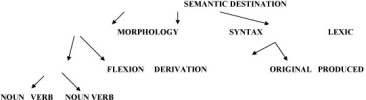
There are grammar and lexical destinations. The first one means the morphological and syntactic destination. The morphological destination can be expressed by flexion of words and derivation. Different languages have the different possibilities to expose the semantic category of destination.
Destination has two semantic meanings:
2. Oriented or aimed destination.
These two meanings are too close to each-other and sometimes with crossing semantic fields.
As the eldest linguistic category destination makes the proper morpho-semantic models in different languages. We can expose the linguistic regulation - EACH LANGUAGE HAS THE SEMANTIC CATEGORY OF DESTINATION. This regulation is based on the following famous regulation that any language can express any idea.
There are a few parameters for language classification in linguistics. We could take destination as the classification parameter like ergativity. Such classification would be based on concrete grammatical distribution of semantic destination in the languages defining the proper models.
The semantic category of destination is exposed in morphology and syntax. The differences between the languages in exposing the destination semantic are shown on these grammar levels: in morphology and syntax and the functional distribution of the forms.
One row of languages (such as Indo-European languages) mainly is forming the lexical and syntactic structures for destination semantic. But the morphological destination is weekly exposed. Another number of languages mainly have the morphological structures for the destination semantic and their syntax is comparably free from this semantic structures.
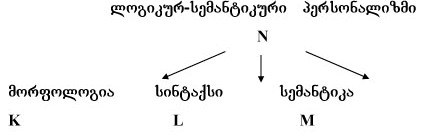
It's clear that in poly-personal verbal structures the verbal category of destination plays the most important role. The language distributes the semantic contents and categories among the grammatical categories. Poly-personal verb carries a lot of different semantics inside the verb.
The present research exposes the theory of linguistic vectority explaining the Georgian category of version as a vectorial category.
The language is a system consisting of units in appropriate relations with each-other. These relations could be exposed by vectors. We have the linguistic vectors on each level of language hierarchy. There are phonetic, morphemic, syntactic, lexical and semantic vectors, showing the attitudes and directions of the units. There are the inter-level vectors as well: morpho-phonetic, morhpo-syntactic, morpho-semantic, lexico-semantic vectors.
We have two general types of vectors showing inside or outside orientation in language systems. The outside vectors are very easy to understand in phonetic changes, such as progressive or regressive assimilation or dissimilation. The proverbs showing the direction or orientation of verbal acts are also clear with their vectors.
The samples for inner vectors: from the one hand there are inter morpheme vectors showing the relations between the markers of the indirect object and category of version in Georgian, from another hand there is inner destination vector expressing intro- or extra-vertization, according to M.Machavariani.
THE GENERAL MODEL F LANGUAGE DESTINATION SYSTEM
2. THE RELATIONS OF DESTINATION WITH THE OTHER MORPHO-SEMANTIC CATEGORIES
There are no independent categories in the language. Any category is in relations with other categories. The place and role of the category is defined by these relations with some other categories in the concrete languages.
Destination as a morpho-semantic category is in close relations with the grammatical categories of person and case from one hand and from another hand it is connected with the categories of classes and ergativity. But there relations are not symmetric. The categories of case and person are taking part in creation of the grammatical category of destination, while ergativity and ergative models are exposed as the parallel system to it. But the category of classes is the basic category for the all above mentioned categories.
We are interpreting the ergativity and the destination as the categories of objects. Must be noted that here we mean the wide field of the semantic and grammar categories and not only the morphological or the syntactic levels.
The languages show the different positions to the object. Nominative-accusative languages give the priority to the direct object and transitivity referencing them in their grammar, while the ergative languages concentrate towards the indirect object, as the ergativity already shows the general idea about the direct object and transitivity in these languages. In the languages of ergative constructions the gradation of destination is the basing diathesis. Even more, the transitivity-intransitivity is not relevant for destination. It's clear that the destination is the elder category than ergativity, as it doesn't depend on transitivity. In ergative languages the principal opposition is not the binary model of transitivity, but the gradation of destination, which in synchronic level is expressed by the verbal prefix vocals in the Georgian language and by the vocal/vocal and consonant suffix markers in Basque.
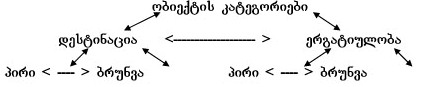
Inter-categorial relations look as follow:
The categories of case and person are in collaboration to create the destination forms. They make the parallel configurations having the same kind of relations with ergativity. Finally, these two object categories show the parallel structures.
The category of classis goes through the all language system appearing as a basing category for its morphology and syntax. In poly-personal languages the relations between the general categories look as following:
Category of Class ergativity
Category of Class destinationreflexivity
Category of Class personpoly-personality
Category of Class case
Because of its week role on the synchronic level the category of classis looses its importance. But it's clear that without the category of classis it's impossible to understand many other categories in the language.
A. DESTINATION AND THE CATEGORY OF CLASSES
Basing on the investigation results of the general semantic parameters of the language we can conclude, that the general semantic categories are universal for any language. We could expose this as the universal regulation. So, the semantic of the category of classes seems also to be universal.
Different languages expose the regulations by diverse type linguistic models giving the priority to the dominant categories. There are the different kinds of reflection of the universal category of classes in different language systems. The Indo-European languages have three forms of gender, Iberian languages have the category of animated-unanimated things, the other languages have the different signs for such classification. Some languages use the systems of religious or social signs for proper identification etc.
The destinator or the addresser is an animated person first of all. The indirect object is the second animated argument as a verbal person involved into the verbal act after the subject. Although we must remember, that on the highest level of linguistic abstraction there is no specific border between the forms of animated/un-animated objects and we also have un-animated indirect objects.
In the Kartvelian languages we have the semantic category of classes not only in the diachronic level, but on the synchronic level of these languages as well exposing the class category with the concrete morphological and semantic units. Although the category of classes is not productive in temporary system of the Kartvalian languages and it has the tendency of disappearing.
On the synchronic level of the Georgian language the category of classes is exposed in its morphology and syntax: it is in the noun groups, in the case and plural systems, in participles, in the different groups of pronouns, in verbs, in proverbs and so on.
We think, that the ergative markers in Georgian and Svan m/man comes from pronoun of the human, who category (from me, mare). The same origin has m - the first person object marker; v - the first person subject marker; in mi-mo proverbs the center of orientation is the first person, expressed by m having the proper opposition c' and etc.
The general diathesis of the category of person is animated-unanimated semantics. This category is very well exposed in the semantics of the different groups of Georgian pronouns.
The personal and demonstrative pronouns have the rests of the class opposition of s- m.
The marker of ergative follows the forms in the other cases as well like the North Caucasian type of declination.
Erg. m-a-n here “n” is the later marker of ergativity
Dat. m-a-s
Gen. m-is(i)
Inst.( i)-m-it
Adve. (i)-m-ad
What ever we think about affix a either consider this with the previous consonant or take it as the inter-consonant vowel, in spite of it, we must say that the ergative declination is quite clear in the Georgian language. This is the same model of declination as in the other Caucasian languages.
In the Georgian language the class category is in the all system of the language. It's spread by pronouns into the noun declination and verbal conjugation. It is properly exposed in poly-personal verbal system. The class category appears in the basic semantics of the each category of the poly-personal verb. Who-what semantic category is the base for many categories in the language, although in the modern language it has no referents itself - except just a few forms.
As noted the class category is the base for the semantic of many other categories and this is the reason why there is no need to be exposed and now it has no morphological referents in Georgian.
Georgian personal and demonstrative pronouns have ergative case, where we have the rests of class categories in so called actantive cases.
The verbal destination as the category of the personal relationship inside the verb of course is connected with the class category. There is no open relation on synchronic level between these categories, but it's impossible to describe the destination without the category of classes.
There are the different forms for the different classes in the Basque language. For example, the post position “for” has the different references for animate and un-animate nouns. Basque also has so called allocutives in the verb showing the gender for the second verbal person (subject, object direct and object indirect). It has feminine and masculine gender, while there is no gender in the pronouns and nouns in the Basque language.
This is very interesting fact the Basque language has the two types of class category - gender and who-what category. These categories produce the proper systems in the language.
The synchronic comparative analysis of relations between destination and class category show a big difference between Georgian and Basque.
The semantic and referential levels of the class category in Georgian and in Basque are exposed in this part of present research. There is also the observation of the class category in word languages and the universal classification scheme is offered:
1. a. Female
1. b. Male
1. c. Neutral
2. Thing
2. A. Animated
2. A. a. Female
2. A. b. Male
2. A. c. Neutral
2. B Un-animated
2. B. a. Classes by the different signs (size, color, forth, light, dynamic, growth, astronomical things, religious units etc.)
2. B.b. Anything else.
According to empirical data the simplier this schemme looks the level of abstraction is higher in a nation. The category of calsses is universal linguistic phenomena and each language had to exopse this somehow shoiwng its individuality.
B. DESTINATION AND ERGATIVITY
Being the object categories destination and ergativity have the very close realtionship between each other according to their semantic and grammatic parameters.
There is the short information about the history of investigations about ergativity in the present research.
In the present work the genesis of ergative in Zanian is discussed. To our opinion suffix k in Megrelian verbs comes form the indefinite pronoun kochi like the appropriate ergative marker in the nouns. The marker with such origin is outlining the animated category of the subject. It's very important, that this verbal marker appears only in the first and the second persons. The first and the second persons are always animated (except a very small number of some semantic meanings).
In the present research the referential and semantic levels of ergativity in the Georgian and the Basque languages are observed in specter of typological comparison.
The transitivity (which means the verbal act with direct object) could be exposed by accusative, instrumentalise or it could be out of verbal reference. In other words it also could stay the only semantic argument, but grammatically non referenced verbal person as it is in Indo-European languages. But it's necessary to expose the subject as the acting person, which has the different type of marking in different languages.
The most important is that the general semantic opposition in the category of person is who-what opposition. The ergative subject is who-category, animated subject. This is a real acting actant or argument. We offer a new term for the ergative subject - the “thinking subject”. This term includes the differences between agency and patient in its semantic.
The different languages have different attitudes to the class category and this is the cause for nominative and ergative constructions in language systems. To our opinion the subject of the what-unanimated category has nominative character while ergative subject is a who-category active person.
In the Kartvelian languages the referents of ergative are given with animated class signs/markers. These are the morphological markers of the animated who category thinking-subject making the opposition configurations with intransitive and non active in-animated thing class category subject. The in-animated thing class category subject and the intransitive subject together with the same in-animated category direct object have the shearing inactive semantic fields exposed by the absolutive case.
We can suppose that historically the thinking subject was exposed only in ergative case and later the changes in distributions between who and what classes subjects gave us the temporary picture in the Georgian language.
It's significant that the un-deliberate action of the verbal subject in the rows of the third serya ( so called turmeobities ) are not expressed by ergative case. Neither potentialis or indefinite common actions or future tenses are considered as any real act with ergative characterization in Georgian. Following the many other linguists we must say that as a matter of fact the semantics of results and perfect are very important for Georgian ergative. The done fact or done action by the thinking subject is the base for Georgian ergativity. Later this was spread to the other forms in the second serya. Megrelian spreads the ergativity even in the forms of the subject of intransitive verbs in the second serya.
Zanian transitive verbs have the ergative subjects in the other rows of conjugation for transitive verbs. So then we could also expose the opposite opinion - that the Kartvelian languages were fully ergative languages and not with the split ergativity as it is now.
According to the last data of online encyclopedia Wikipedia, there are the following three types of split ergativity:
In the Australian languages (like Dyrbal) the ergative is exposed morpho-syntactically, but with the first and the second personal pronouns we have nominative and accusative cases.
We'd love to put the parallels between these forms and Megrelian verbal suffix k, which appears in the first and seconds persons. Besides these first two personal pronouns have the same forms in Georgian (being out declination).
From the Caucasian languages the Batsbian language shows the similarity to this group, although we have ergative in the first and second persons even with intransitive verbs. This fact outlines the importance and the main role of the class category of the thinking subject.
The languages which have ergative for the subjects in perfect tenses.
The modern Georgian ergative system belongs to this group.
The languages which have the ergative for intransitive subjects (Dakota).
The subject of active verb (he runs) is in ergative like the subject of the transitive verbs. But the subject of semantically passive or inactive verbs is in nominative case. Typologically it seems very interesting comparison with Megrelian ergative forms of intransitive verbs in the second serya. We suppose that in Megrelian diachronically the verbs of active nature got the ergative case first spreading this fact into other forms later. Unfortunately there is no written material to investigate this development. Georgian also could join to this group with its medio-actives.
This fact that the Kartvelian languages give all variants in this classification is very significant and we can't consider such classification relevant even only on the samples of Kartvelain data. Georgian can join to the second and the third groups. But such kind of combinations are not considered in this classification.
According to semantic and morphological meanings of the arguments of predicate or other verbal actants (all the verbal persons that are involved in the verbal act) the diathesis of ergativity and destination is general opposition of direct and indirect objects as their functional and formal opposition. The indirect object with its all wide specter is considered as a destinator and ergativity is connected with a direct object. Such attitude is quite understandable because there is no morphological category of transitivity in Georgian and in the other Kartvelian languages. Transitivity has no morphological markers and as a semantic category it's connected with the direct object being reflected in its morpho-semantic.
According to some linguists in Georgian the ergative construction in the second serya is not prior, as the ergativity is given only by syntactic way and the personal merkers in the first and second serya are symmetric, besides there is no ergative marker in the verbs. We neither have any common reference for the ergative case in the Kartvelian languages.
We suppose that in Megrealian verbs the suffix -k is the ergative suffix confirming the verbal ergativity in the Kartvelian languages. The very important fact is that this suffix is in the first and the third seryas.
To our opinion the thematic markers which appear later have some kind of ergative meanings. By the way according to their distribution we could think that these are markers of the verbal ergativity in the Zanian language.
The fact that the thematic markers just like Megralian - k appear in the intransitive verbs, outlines the importance of the thinking subject and not the transitivity for the Karvelian ergativity. Zanian ergative suffix is the reason for un-demanded strict system of the thematic markers in the language in opposite with Georgian.
The thematic markers activate the dynamism in the verbal process. This is a semantic significant for the who-animated thinking subject.
To our opinion the verbal forms with the thematic markers are the opposition forms to the second serya ergative construction, which is the classic form of ergativity. So, that we have the oppositions of the who- category thinking subject by the ergative markers in the nouns from one hand and in the verbs from another hand. In the other words there are the constructions formed by ergative or by ergative dative in the perfect tenses and for the dynamic verbs there are the verbal markers of ergatiovity.
Better, we have the three types of ergativity in kartvelian. The thematic markers are not the obligator markers in the third serya, because of ergative-dative case for the subject and the perfect tense. In this serya we have the combination forms of the first two seryas.
So, we have the verbal ergative in the first serya, the classic form of ergativity in the second serya with the subject in the ergative case with the perfect tense and the combination forms in the third serya with ergative-dative.
We must outline that this is a very big theme and it needs to be investigated more carefully. In the presented research we are just arising the question.
Concerning the reconstruction of the ergative case in proto-kartvelian although there is no common referent exposed, but we have the same semantic for the ergative markers in all Kartvelian languages as we noted above.
Many scientists considered that the opposition of nominative and ergative constructions is the most important for Basque verb dividing them on two groups:
1. The verbs with the subject in nominative case or in partitive case
2. The verbs with the subject in ergative case.
If we take in consideration that the agence (the transitive subject) and the dative actant have the identical markers in the verb, we can see another opposition: nominative and partitive from one hand and ergative and dative from another hand. Such close relations between ergative and dative in Basque verb, remains us about the dative construction for Georgian transitive verbs in the third serya. Concerning the partitive case we must say that it is often used as a subject case for negative forms in different languages.
The whole point is in distribution of semantics of the who-what category in the subject. The thinking subject of who animated category is in ergative and what-conversional subject is in nominative.
To our opinion ergative and nominative constructions diachronically may show the parallel development.
In the Georgian language the system of destination is widely open but there is the split ergativity in it, while the Basque language has the classic ergative constructions but with less exposition of destination systems in the language. It means that the destination semantic and the indirect object are prior categories for Georgian while Basque gives the priority to transitivity and semantic categories of the indirect object.
C. DESTINATION AND VERBAL PERSONALITY
Well known fact is following - if the verbal morphology is rich, there is the less demand for some other categories. The poly-personal verb and the case system are like guarantees for relatively free word order in the sentences. The verbal destination also reduces the number of theoretically possible other morphological and syntactic forms and categories of destination in the language.
The poly-personal Basque verb in difference from Georgian is always exposing all markers of all its verbal persons. There are some morphologically non referenced or weakly marked, or partially marled verbal persons/actants in Georgian, while Basque doesn't have such facts being very accurate in exposing each verbal person. It has the strict succession in exposing its grammatical categories such as personality, ergativity, plurality, etc. Sometimes the Basque language has even double referencing for some grammar categories.
In Georgian verbs some personal referents meet each-other in prefix position and this fact became the reason for many different opinions about this item.
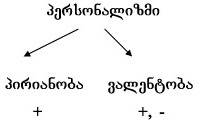
According to some modern Georgian linguists verbal personality is a morphological category and only referenced persons can be taken into account. We disagree with this opinion as we think that it's very important for the Georgian verbal morphology to include in the verbal personality the zero-marker persons and even non-referenced persons such as the third direct object in the modern Georgian language.
The conjugation system in Georgian is based on such understanding of personality. Besides, this new theory of verbal personality is full of logical problems.
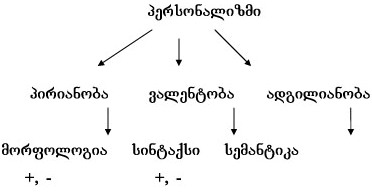
If we consider valentity as a semantic category, we can expose the appropriate linguistic universal regulations THERE ARE DIFFERENT VALENTITY VERBS IN EACH LANGUAGE AND THE REALIZATION OF THESE DIFFERENCIES ARE THE PROBLEM OF THE ROPER GRAMMAR.
II. CHAPTER
VERBAL SDESTINATION
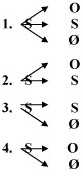
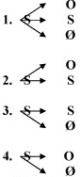
The models of verbal destination:
(Here S - is the subject, O - is the object indirect and O - is zero.)
There is the first model in the modern Georgian language. We consider that historically there was the forth model in Georgian like Abkhazian and Basque. The same morpheme i can not be used to distinguish the opposition forms inside the one category. So the opposition was between the forms with version and without it.
The classification of verbal destination runs through the opposition members by two parameters:
1. Functional identification of verbal person - subject, object direct or object indirect:
2. Verbal person's general personal identification - the first person, the second person, the third person.
In the both cases the class category of verbal person is a very important matter.
1. THE TYPOLOGICAL ANALYSIS OF THE CATEGORY OF VERSION IN GEORGIAN VERBS
The category of version is the general category of destination in Georgian, which is well investigated by many specialists in Georgia and abroad.
The present research introduces the traditional and modern theories and positions concerning the category of version. Some opposite opinions are also exposed in the dissertation. The category is characterized by morphological and semantic points of view. The verbal poly-personality is discussed here and the universal linguistic regulation is revealed - ONLY THE POLY-PERSONAL VERBS CAN EXPOSE THE VERBAL CATEGORY OF DESTINATION.
The modern Georgian language has the strict succession for the morpho-semantic category of version:
Objective (or so called extravertial) version - i, u
Subjective (or so called introvertial) version - i
We outline the peculiarity of the category of version. The existence of a few anomalies together with the regulations is considered as a normal fact in the languages. The grammar category of version has the following peculiarities:
The difference between transitive and intransitive verbs by the category of version is systemic. The three dimensional model of Georgian version is available only in transitive verbs. Intransitive verbs may have only the two dimensional model, because there is no subjective version in intransitive verbs. This is the systemic difference of principle character showing the importance and initial two-dimensional model of version in the Georgian language.
The verbs that are lacking some forms of the category of version. There are the two groups of such verbs:
The lack of the forms inside the one row of conjugation with the missing opposition forms of version, for example: we have vacnob-vicnob, but there is no objective version form - vucnob.
The lack of the forms in the verbs that are missing the forms in conjugation paradigm, for example we have the opposition of the static verbs c'eria - uc'eria and they both have etc'era in the second serya. The three personal verbs also lose the meaning of version in the forms of the third serya. When version creates the new forms of conjugation rows having the function of flexion the verbal forms it's loosing its destination the meaning.
Sometimes there are two indirect objects in the verbs. Of course this doesn't mean that the both of them are exposed in the verb.
A. Two indirect objects in intransitive verbs - in passives: micvia (you me him) mimepkar (you me him); in medial verbs: mimidevs (he me him), mitkiva (it me him). One from these two is always a possessor object and it could have the alternatively descriptive syntactic forms with a two personal verb and the argument in the possessive object case - genitive or dative (out of the verb); for example: micvia me cols kaba compare with - Cems cols kaba acvia.
B. Two indirect objects in transitive verbs create the four personal forms: mimic'era (he me it him) mimixata (he me it him). In such cases mostly causatives are used: gamiketebine (you me him it), damixatvine (you me him it). All types of such forms have the objective version without any exceptions.
The adding the indirect object has two ways and reasons:
I. The causation needs to have the executive object or
II. The possessive beneficiary semantic needs to be outlined.
The forms with two indirect objects mainly have the semantics of objective version.
The poly-semantic forms of version.
There are a few verbal forms in the Georgian language with the conjugative direct object and it makes possible to have the forms of subjective version in the objective rows of these verbs. These forms are mostly poly-semantic (damiyena/dagiyena).
The verbs without the category of version. Such verbs have no opposition forms and therefore have no category of version: uyvars, icis, axsovs, hgonia, uc'iravs, sz'uls
These verbs have the two groups as well:
The forms without the markers of version: sc'ams, cz'uls, hqvia and etc. These verbs have no markers and neither understanding of version.
The forms with the markers of version: i-c'is, u-yvars, a-qvs and etc. These verbs have the version markers without destination semantic, besides they have no opposite forms.
We suppose that no marker can appear in the forms without the proper meaning and such forms show diachronically different pictures. This is proved by some form comparisons from other the Katrvelian languages, for example the opposition by version is restored in the following forms: vici (Georgian) - mixa-xoxa (Svan).
The question of the formal and functional diachronic changes of the category version is a big theme that needs to be investigated very carefully.
Following the many scientists we confirm that this category passed a long way to the modern situation. It is connected with the categories of class, parson, case, mood, causation, conjugation and many other verbal categories. The independent analysis of any grammar category is not considered expedient by us, as the language is the system and all its categories are connected with each-other painting the proper picture of its individuality. This is very well shown on the samples of the deictic vowels in Georgian.
Concerning the verbal prefix vocals in Georgian verbs A. Shanidze wrote that the prefixes in passive were from the category of version by their origin. Of course it's clear that the prefix vocals unify the function of version and mood in one marker. Actually the mood and version have the same ranges in the verbal morphemic row and this identical position of these two categories makes complicate the final answer for e-i opposition. In modern Georgian we have the poly-functional verbal vocals in the prefix positions.
To our opinion the prefix vocals in Georgian verbs are poly-personal affixes with synthetic semantics outlining the concrete semantic in concrete morphological forms.
This fact (together with some other facts like that) separates the Georgian language from other agglutinative type of languages.
The present research brings the light to the non-functional forms of version in the third serya. Generally, the version is the category of an indirect object. In the third serya where this indirect object goes out the verb, the forms lose the meaning of version although they have the markers, which are left in the verb in order to keep the destination semantics of the verb. Besides, the indirect object out of a verb takes the post position tvis - for to keep the destination semantics. Factually, in these forms the semantics is left the same, but the morphology is changed. The semantics of destination chooses the other morphological forms to expose its content. But the destination semantic doesn't let the verb free from it leaving its markers in the verbal forms. These markers are out of function as they stay without the verbal indirect object.
As it is already noted, the languages don't know any non-functional markers - any marker synchronically or diachronically had the proper meanings and functions, which were changed or lost later. As a matter in fact the morphemes are with two sides of the coin: with the proper semantics and their formal references. We speak about non-function morphemes when these functions are changed or their semantic fields become narrower. The semantic field of the word is changeable. It can be changed in different ways. This is not only about the root morphemes but about the all types of morphemes as well. But of course it's clear, that the speed of coefficient for such changes is much lower in morphology.
It's well known fact that historically the forms of the third serya came from the static verbs and the appropriate historical analysis is also different. Today the forms of the third serya are on the other space paradigmatically and syntagmatically. These are the opposition forms for the forms of the first and the second seryas and they are far from their original static semantic. Now they act with their modern semantic.
Diachronically the above mentioned situation looks as following: the historical indirect object becomes the subject while producing the forms of the third serya from the static verbs. That explains the fact of inversion in Georgian. Realizing this fact in a new way a new verbal person appears - the indirect object, which is the only legal indirect object in the first and the second seryas. In the third serya we have the historical indirect object with its markers (in the case systems of the nouns and in the personal marker of the verb), although now this is already the subject for these forms. The verb doesn't take the second indirect object and puts it out the verb. We got a simple object with a postposition. In many other languages such objects are considered as verbal arguments. As a matter in fact the Georgian verbs may have two indirect objects in one form (mic'mie, mismie), but usually this is a fact of another category - the causative relations are exposed by these forms. Besides, in such forms the only one indirect object from these two has the priority of being marked in the verbs.
It's significant that even without this new indirect object which can't realize itself in the verbal morphology we already have the markers of version from the original static forms. These markers were the functional markers in static verbs and therefore these markers can be considered without new indirect object. Only diachronic analysis wouldn't be correct as the language even creates the poly-semantic forms to express the new meanings. We must understand the tendency and the reality - the new forms have new semantics.
From their side the static verbs have the version: c'eria - uc'eria - ac'eria. As there was a demand to outline the destination semantic in the third serya, the referenced forms with objective version were taken as basic for new forms. This choice between the forms of static verbs seems absolutely understandable. On the synchronic level these forms are non-functional forms as they stayed without the indirect object and no objective version can exist without indirect verbal relation.
The version is a relative category. Reflexive is a binary type of relation. To our opinion there was the two-dimensional model of version in the Georgian language (and in all the Kartvelian languages as well). It was as the prior opposition of the forms with and without the version. Later the prefixal mono-personality of Georgian verbs actively helped to create the new forms of the opposition of subjective version.
The reflexive and version flow together. But we must note that the reflexive is a different grammar category with its proper syntactic and morpho-semantic models. Reflexive as a semantic category loses its independence joining to the morphology of version creating the three dimensional model in the Kartvelian languages.
The verbal type of marking of reflexive reduces the need of any kind of other references at the other spears of morphology. With tvis - postposition the category of reflexive produces out-verb reflexivity creating the parallel schemes on the syntactic level.
The primary function of the postposition tvis is reflexivity as it is produced from the form tavi (head). In many languages “head” produces the reflexive forms. Such scheme is in the Basque language: the noun or the pronoun in dative+head (buru) in dative; for example: Gure buruari - for us, Bere buruari - for himself.
Georgian syntactic reflexive is mainly produced by the form tavistvis which is reduplication of the formants. Such reduplication was used to distinguish reflexivity from the syntactic category of version.
The distribution of reflexivity and version on the morpho-semantic level makes the following scheme: if we have the forms of objective version the forms with tvis postposition are not acceptable there; for example: miketebs chemtvis - is prohibited in the language, while with reflexive version we can have viketeb chemtvis. So, the reflexive as a category can accept the reduplicative referencing in opposite to the category of version. This is a significant difference between the reflexivity and version.
The poly-semantic form damiyena (he me) expressing the subjective version with conjugative object, loses its reflexivity. The best expression of reflexivity is in the forms where the object is in the subject and additionally can be given by adding the form - tavi; for example: ixatavs tavs, ilamazebs tavs etc.
The reflexivity needs the special attitude with causation when the direct object is the first or the second person; compare: daavic'ya - man mas is and daavic'ya - man mas sheni tavi, dagavic'ya- man shen chemi tavi, damavic'ya - man me sheni tavi. The first and the second direct objects enter the verb by reflexive forms as the third person - through the possessive pronoun and tavi. This has no alternative in the modern Georgian language. It's rare, when the first and the second persons create the forms not like the third one. This can be considered the appearance of the class category. The third person has a choice in this paradigm: to give the verbal referencing - daavic'ya - man mas is or to follow the first two persons making the symmetric system - daavic'ya - man mas misi tavi.
THE CATEGORY OF ADDRESSEE OF BASQUE BERB
The first of all, the destination is exposed in the verb. The category of addressee is the category which shows the destination of a verbal act. Such destination in Basque verb can be only for indirect object. The Basque language has the forth model of verbal destination.
The general idea of the category of addressee sounds as following: this is a verbal form, which shows to whom the verbal act is destinated or addressed. The destination vector may be directed to the first, second or the third person of singular or plural forms.
In Basque the destination is oriented only to the indirect object. The opposition is between the neutral forms without markers and the marked objective forms. This is the general semantic of the category of addressee of the Basque verb. The formal side of the category has a very simple model. The markers of the category of addressee with any kind of indirect object are ki and i , although sometimes zki appears in plural forms. The general marker of addressee is i, which is the dative case marker originally. Dative is the case for indirect object. Many linguists noticed this i in the verbs and most of them call it dative i , and such verbs were determined as the verbs with dative markers. But the proper verbal category was not exposed in their researches.
Analyzing the category of addressee we consider very important to outline the fact that its marker is always exposed in the verb and its' position is in front of the obligatorily referenced indirect object marker, which is the suffix on the synchronic level of the language. Actually the both morphemes (of addressee and of indirect object) are obligatorily presented in the Basque verb. If we have indirect object this means that we have the category of addressee as well. So, it could be named as the category of indirect object, as it's always attached to the indirect object in Basque.
THE CATEGORY OF ADDRESSEE AND ITS MORPHO-SEMANTICAL ANALYSIS
The addressee is a morphological category of Basque grammar which shows to whom, to whose interest the verbal act is destinated. In other words this category shows to which indirect object the destination of verbal act is addressed or oriented. The addresser is indirect object which is involved in the verbal act, this is an interested argument.
The indirect object in the Basque language usually is animated person answering to the question -Nori? (whom, for/to whom?) In nouns the addresser could be differently referenced. In the most cases it is exposed by the dative case, sometimes the addresser appears with the destination postposition - for. Syntactically the addresser is an indirect object of a sentence.
The category of addressee is the verbal destination having the subject as a central point in spite of the degree of its activity.
Schematically the relations of Basque addressee look as follow:
--------- A2 s.pl.
----- A3 s.pl.
-------- A1 s.pl.
----- A3 s.pl.
------- A1 s.pl
---- A2 s.pl.
------- A3 s.pl.
According to famous person combination prohibitions in verbs these relations bellow are not acceptable:
S 1 s.pl. --- A1 s.pl. and S 2 s.pl. ---- A2 s.pl.
The reflexivity in the Basque language is not a morphological category of the verb. As a matter in fact it's exposed by the lexical means. The verbal act done by the subject directed to the interests of the subject itself is not expressed by the Basque verb. So, there is no verbal intro-vertization or subjective type destination in Basque verbs.
Sometimes we have so called formal reflexivity in the Basque language; for example there is the ergative passive without the subject in the sentence - ikusi naiz - I am seen and ikuzi dut - I have seen.
In Basque there is no destinative reflexivity in such sentences: Bere buruari ezan diot. - He told himself (-to his own head). We have the formal indirect object and the formal reflexivity.
Some Georgian linguists call the analogical forms gasxvisebuli, that means changeable - becoming of others. Bere buruari - to himself - this is the addresser in dative. To our definition, this is the formal addresser exposed by the reflexive pronoun buru - head and therefore we have the formal addressee. So, the verbal reflexivity can be exposed only by the formal addressee the Basque language.
The addressee of Basque verb can express only the content of objective version, which means that the aim orientation is out of the interests of the subject. The vector of destination is oriented from the subject to the indirect object. If we consider the subject as a center fro a verbal action, than the addressee is the centrifugal vectorial category.
The Basque language shows no dialectal differences in exposing the category addressee and indirect object markers.
There are two types of addressers:
The closer addresser in dative that is involved to the verbal act,
The addresser with the destination postposition or so called syntactic addresser.
The language exposes only one - the closer addresser - in the verb.
In the Basque language the most verbs have the analytic forms. Only a few verbs keep the synthetic type of conjugation and even they have the parallel analytic forms at the same moment. The influence of the Indo -European languages on the Basque language is so big that even having the synthetic forms Basque native speakers give an advantage to the analytic forms.
According to the Basque linguist I. Laka the number of verbs that can inflect some of their forms synthetically is very small, compared to the entire set of verbs in Euskara. The overwhelming majority of verbs can only inflect with the help of an auxiliary verb. Older stages of the language had a much larger set of synthetic verbs. The grammar of the Royal Academy of Basque Language estimates that in modern spoken Basque there are only about ten verbs where synthetic form are used: egon “stay”, joan “go”, etorri “arrive”, ibili “walk”, izan “to be”, jakin “know”, eduki “have”, ekarri “bring”, eraman “take”, ihardun “engage”. Some other verbs, like jarin “to ooze, to flow”, erabili “to use”, irudi “to look like”, esan “to say” are used synthetically only in a few forms, and finally there is a third set of verbs, like atxeki “attach”, jarraiki “follow”, esan “say”, eman “give” or entzun “hear”, which are occasionally used in synthetic fashion in literary language.
The category of addressee as the morphological category of the poly-personal verb can be exposed only in synthetic verbs and in the auxiliary verbs as well.
There are the following groups of verbs the Basque language:
1. Nor? One personal intransitive - un-ergative - un-addressee,
2. Nor-Nori? Two personal intransitive - un-ergative - with addressee,
3. Nor-Nork? Two personal transitive - ergative - un-addressee,
4. Zer-nori-nork? Three personal - ergative - with addressee.
So, there are three groups:
1. Without object - un-addressee - un-ergative - one personal or absolute verbs;
2. With two objects - ergative - with addressee - three personal verbs;
3. With one object or alternative verbs: with ergative or addressee - two personal verbs.
The choice between the ergativity and addressee appears in two- personal verbs, where the object is either direct or indirect. The absolutive one personal verbs have neither ergative nor addressee. That's normal, as the category of addressee like the category of version needs to have the poly-personal verb to be exposed at least it needs one more argument to be added to the subject - the indirect object to whom the verbal act can be oriented. Without such argument no verbal destination can appear. One personal verbs and two personal transitive verbs can't expose the category of addressee.
The case for addresser is dative. When the same semantic goes out of dative and is expressed by the postpositions it is a descriptive addressee or a syntactic destination. In such cases the verb stays neutral, it's without addressee.
The dative case marker is the suffix i, which has inter-vocal r in a post-vocal position: Mendi-r-i - to the mountain, ama-r-i - to the mother.
The classification of Basque verbs by addressee is given in the present research. The destination doesn't depend on transitivity although there are ergative and un-ergative addressee in the Basque language. The system is created because of the two way object meanings - direct and indirect. By the way this linguistic fact also is expressed in the markers of addressee. To our opinion, the general marker of addressee ki consists of dative i and ergative k. We suppose that the ergative destination was at the very beginning of this category.
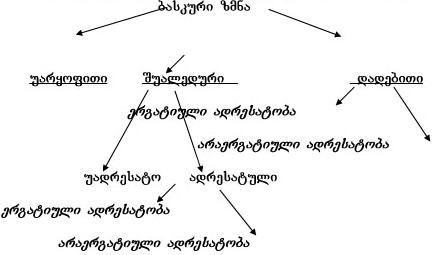
According to the data of addressee the following classification is also available:
I. The verbs which never add the indirect object and are always un-addressee can be considered as negative forms:
II. The verbs that always have indirect object and always have addressee can be considered as positive forms:
1. Nor-Nori,
2. Nor/Zer- Nori-Nork E
III. The verbs that may have indirect object and may not - can be considered as medial forms. Sometimes they have the category of addressee and sometimes - not.
1. Nor (+ Oidn. -Nori )
2. Nor-Nork (+ Oidn. -Nori)
The ergative destination creates the following schemes in Basque verbs:
NEGATIVE - MEDIAL
POSITIVE
un-addresee with addressee
ergative addresee un-ergative addressee
ergative addresee un-ergative addressee
B. THE MARKERS OF THE CATEGORY OF ADDRESEE
Historically the general marker of addressee is i and on the synchronic level we have ki/i. The addressee can be marked by one or two markers. There are the both possible in Basque verb. On the synchronic level the both type of references are suffixes. The two-morpheme marking is the classic form for verbal destination category exposed by the markers of indirect object and by the markers of addressee. According to agglutination principles the general semantic meaning of destination is exposed by the markers of addressee and the concrete addresser is exposed by the second morpheme - by a marker of indirect object, which shows the person and plurality of the addresser.
The one-morpheme marking is available only with the indirect object markers, without the markers of addressee as they don't show the person and plurality/singularity of the addresser.
The markers of addressee don't change in the different verbal rows of conjugation and neither by verbal persons. We suppose that diachronically there was the prefix i for the verbal destination, which gave the prefix-suffix forms (i-ki/i) at the second stage and finally we've got the suffix ki/i . This process was possible because of one reason - the destination lost its meaning in the prefix position.
K and i are the different morphemes. I is a form of the dative case in the Basque language. We think that the formant k is from ergative and we have the ergative dative in verbs, which loses its prior ergative meaning in alternative forms with one object forms with addressee. Today ki is understood as one morpheme.
To our opinion the functions of ergativity and addressee came too close to each-other and were co-joined in one reference. Actually basing on the data from imperatives we suppose that k appears on the second step (prefix-suffix) as the ergative member of verbal destination act. As rows of imperatives show the marker of addressee first appears at the third person indirect object as a suffix. When the subject is the third person here we have ki . We suppose that it spread from the three personal verbs with two objects to the other verbal forms. We think that these events were parallels with suffixization verbal destinative markers.
The first and the second persons are the members of communication, so they are concrete persons and don't need to have any type of additional marking. The third person, which is so called non-person being the unmarked member of the correlation, needs to be exposed concretely. It could be proximate or obviate.
It's significant that in the Basque and Georgian languages have the identical space relations in the demonstrative pronouns. It's the famous three dimensional model which needs wider semantic for the third person. At the same moment this verbal persons will need better identification. It explains the reason for the appearance of destination marker in the third person. To our opinion then this marker was spread to all verbal system by analogy or symmetry.
We must say that the markers of addressee originally come from the demonstrative pronouns like the origin of verbal persons.
The presented research gives the genesis of morpheme zki. It consists of z of plurality and ki of addresee. On another steps of language development zki is realized as one morpheme of transitive/intransitive plurality for verbal persons.
The Basque language often exposes the verbal destination by double marking. Zki itself repeats the marking of addressee by adding to ki. The second step (prefix-suffix) of marking is also double type of marking. The classic variant of destination in the Basque language is by the sum of the two morphemes.
In the two morpheme marking the first marker ki/I - the marker of addresee stays unchangeable and the second marker (the marker of indirect object) is a changeable grammar unit.
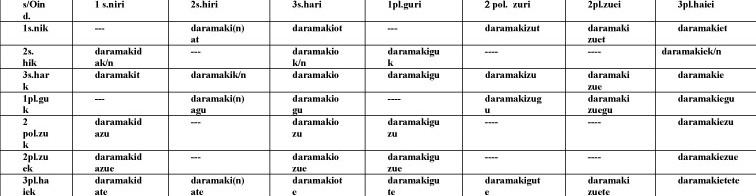
C. THE SAMPLES OF CONJUGATION OF THE BASQUE VERB WITH AND WITHOUT ADDRESSEE
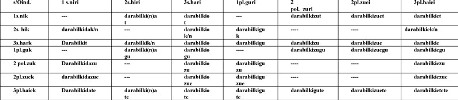
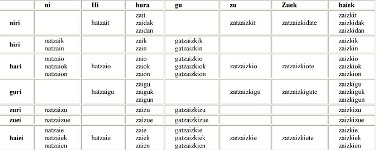
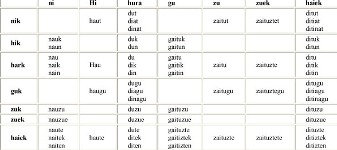
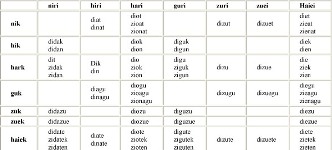
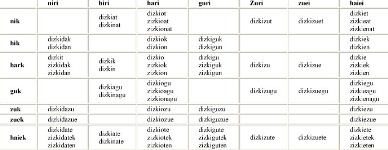
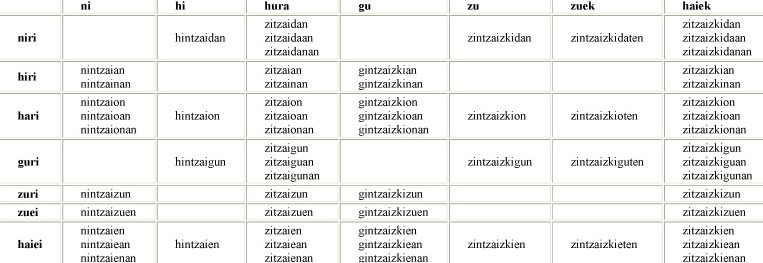
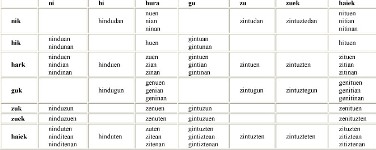
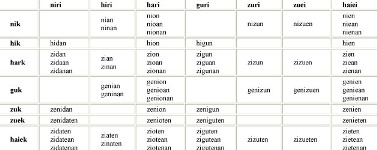
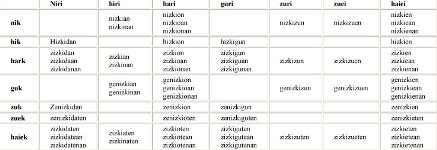
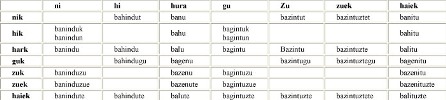
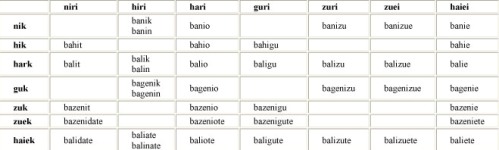
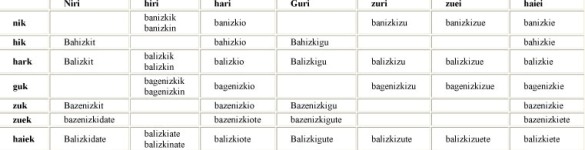
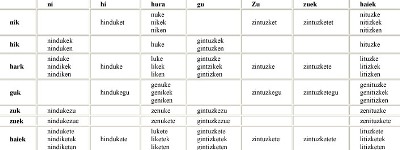
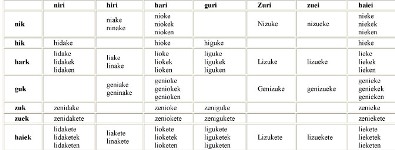
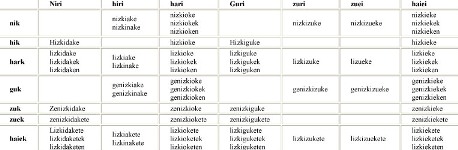
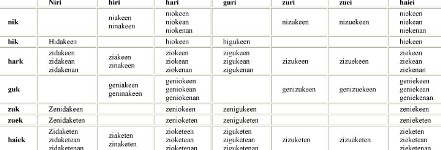
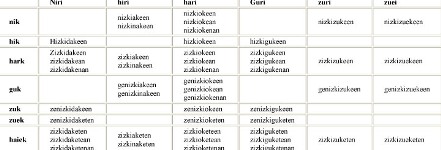
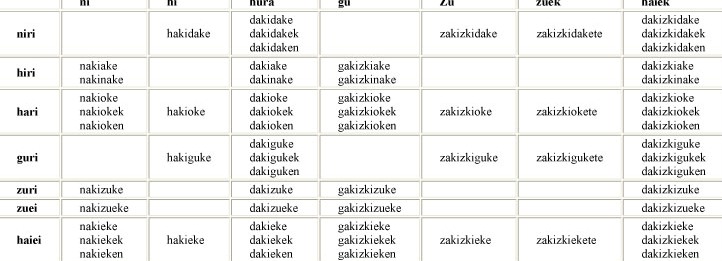
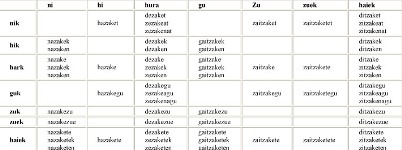
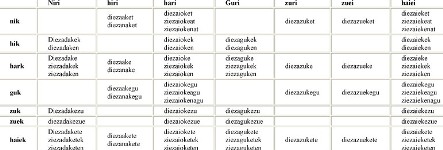
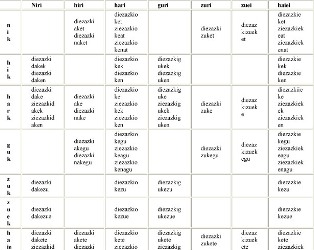
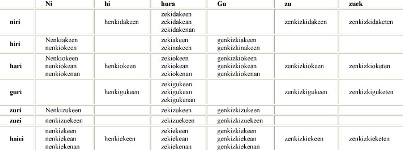
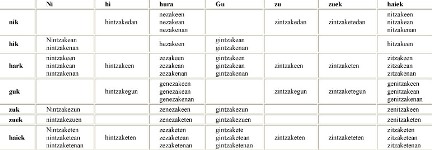
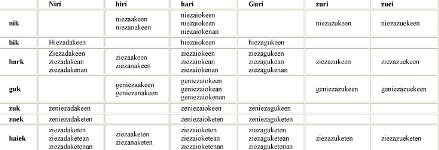
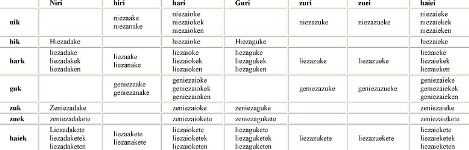
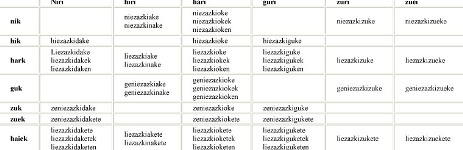
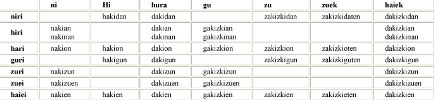
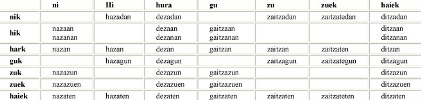
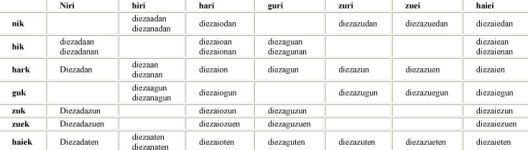
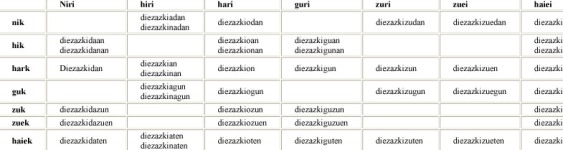
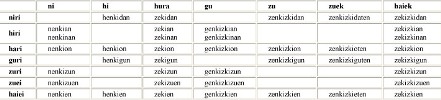
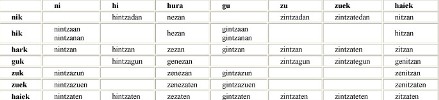
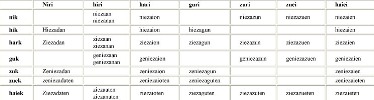
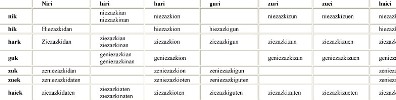
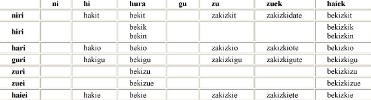
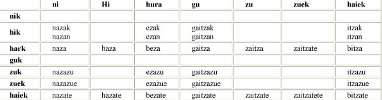
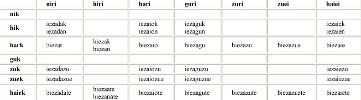
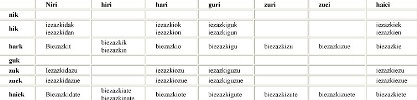
Bellow we have the samples of conjugation of one personal verb (Nor), the two-personal intransitive verb ( Nor-Nori), the two-personal transitive verb (Nor-Nork) and the three personal verb (Nor-Nori-Nork):
S1s. ----- nator
S2s. ---- hator
S3s. ------ dator
S1pl. ----- gatoz
S2pol. ---- zatoz
S2pl. ------ zatozte
S3pl. ----- datoz
Zer/Nor-Nork ekarri (to bring)
Zer/Nor-Nori- Nork ekarri
1. THE TYPLOGICAL COMPARISON OF ADDRESEE AND VERSION
In opposite to Georgian the Basque verbs have the strict sequence in exposing the verbal persons and verbal destination. In Georgian the verbal persons are not always referenced in the verb.
There are the two variants in Georgian verbs:
The verbal forms with indirect object but without version (misc'era, scema).
This group has two subgroups:
Without version at all (misc'era, scema),
With the neutral version (aatala, gamoacala).
These are two personal intransitive verbs or three personal transitive verbs.
2. The verbal forms with indirect object with exposed version. Like the first group these are also two personal intransitive verbs or three personal transitive verbs.
There is the third variant which is significant only for Georgian - this is the subjective version in two personal transitive verbs, which is considered as the opposite form for the forms of objective version in the modern Georgian language.
Must be note, that diachronically reflexive is a different category although today it successfully creates the well organized system of the category of version together with the forms of objective version in the Georgian language. The verbal reflexive is the special from of destination in Georgian, which appears as the most important difference in exposing the verbal destination between these two comparative languages - Georgian and Basque.
For the Georgian three dimensional model of verbal destination the Basque verb has the two dimensional model to be compared with the two possible variants:
There is the indirect object with addressee in the verb,
There is no verbal indirect object and no addressee.
Such different systems differently open the destination in the languages structures. The Basque seems to be more succession in exposing this category in its verbal system and therefore it's limited in exposing the destination semantic by other grammar forms.
In opposite to Basque the Georgian language is richer in exposing the destination semantic by other grammar units.
In the presented research the new basic theory for historical-comparative linguistics is exposed.
Generally accepted regular correlation of sounds in historical-comparative linguistics has no alternative for researching the genitival relativity between languages. Of course there is no doubt about this theory. Although we must say that the regular correlations exposed on the lexical level of a language show relatively new data of the language diachronic vertical. When we talk about the history and past of a language, we mean much elder period than it could be appear in its literature. The language development is much slower and longer process with no doubt.
The different languages have the different speeds of changes. It depends on diverse type socio-historical and cultural-political factors. We suppose that the coefficient of systemic changes in a language is approximately 10-12 times less comparing with the literary language changes.
Talking about diachronic and historical factors we must take into our consideration this coefficient as the language investigations are based on the proper literary data.
In the cases where we have no regular correlation of sounds, but the genetic relationship is out of doubts, we offer another way for resolving the problem:
We offer a linguistic axiomatic theory - the genetic relationship between
the languages can be proved by exposing the regular correlations between morphematic sounds (on morpho-ponological level) showing the functional-structural symmetry or appropriate asymmetry.
This theory is based on generally accepted idea about much slower changes in morphology than in the lexical level. The morpheme is a concrete semantic form, a grammatical body of the semantics category (we consider a root as a lexical morpheme). There is no morphology without semantic. Each grammatical category has some semantic-functional content. The morpho-semantic level is a heart of any language. Traditionally we expose the regular correlation of sounds on lexical level. Now we offer to remove it to the morphology. Factually, we must find the regular correlation of phonemes on morphological level and not only on root-morphemes. We speak about morphonology. With such attitude we really get the much elder diachronic comparative picture. We would need to reach a decisive percent of morpho-semantic systemic correlations. The question can't be considered as resolved with data of one or a few categories.
The most morphemes originally are the independent words, for example the pronoun origin of markers of cases and the verbal persons in many languages. Morpheme is the eldest formant in a language and if such formants show the phonological correlations together with parallel structural identity between the languages, the genetic relationship between these languages would be without any doubt.
Factually, the eldest picture of language micro-semantic is in morphology.
Morphemic correlations of language systems are defined by 4 parameters:
Proper morpho-semantic and grammatical meaning,
System of oppositional forms,
Affixal form (position)
Relations with the other categories.
We distinguish the relevant and irrelevant data for such comparatives; for example, the systems of inter-junctions and verbal poly-personal categories can't have the equal importance. Only the core grammatical categories are relevant.
For such comparison the theory about linguistic vectors could be widely used in practice for typological and comparative linguistics.
For investigation of the morpho-semantic level of a language we need to define the relevant and irrelevant matters with two conditions:
To define the sound diapason or so called phonetic variants. All possible changes this sound may have.
To define the semantic diapason for morphological categories. All possible morphological variants that may appear.
The morphological system of a category often goes far from the expected variants even in relative languages of the same genitive family. We have a lot of such samples (For example, the references and semantic sides of Megrelain ergative is out of Kartvelian system).
We must define what is important for the structure - it would be the morpho-semantic meaning which is more important then a referent itself. Although we must remember that this could lead us to the linguistic universals. (This could be the shortest lingo-poetry way to Babylon.)
Well, we think that about 75-80%25 of structural coincides can resolve the problem. Linguistic vectors on different levels also must show the similarity. We consider very permissive the future investigations of this theory for Iberian-Kartvelian and North Caucasian languages.
Here we must outline that the presented research is strictly oriented to the typological and not historical-comparative linguistics.
The typological analysis of verbal destination in Basque and Georgian must be investigated in three levels:
Functional semantic,
Morpho-syntactic and
Referential levels
On functional semantic level the addressee and the version both seem to be the identical categories showing the direction of a verbal act to the interested verbal person. This is a dynamic category with the inside vectors. Although as we already had mentioned, there is a subjective version added to the destination system of Georgian verb. This is the general difference on this level.
The typological comparison between the Basque addressee and the Georgian version on the morpho-syntactic level shows more differences. The Georgian version differs inner categorical forms (neutral, subjective, objective), while Basque addressee doesn't know this. The forms with - and without addressee are forming opposition system of Basque verb. The reason for two dimensional destination model of Basque verb is the fact that reflexivity is not a verbal category. But if we take into account the historical picture of Georgian model (as it's noted above, there was the two dimensional model in Georgian) we could talk about isomorphism of addressee and version on the function semantic and morpho-syntactic levels.
For both verbal category - for addressee and for version the two dimensional model is prior. Such binary scheme of the verbal destination seems to be universal by the typological point of view.
The verbal destination is mainly the indirect relation binary category and therefore it would be correct to compare addressee only with the objective version. The semantic models of addressee and the objective version forms are identical:
S+Oind=>S, Oind.
S,Od.+Oind=>S, Od., Oind.
There are some semantic differences between the addressee and objective version. It's important to note that the Georgian indirect object can have a wide semantic field and it could be an addresser, a possessor, a locative, a benefactive and etc. So, we can have the two personal intransitive verbs in Georgian without version and to get the destination character there forms will need just to change the meaning of indirect object and not to add the verbal argument; for example: azis-uzis, ac'evs-uwevs, etc.
The addressee and objective version have the same syntactic models: the verbal argument in dative is the interested actant - the indirect object in free word order in the both languages.
The picture of function-semantic and morpho-syntactic typological comparison of the Basque and Georgian verbal destination looks as following:
On the synchronic level the version of Georgian verb has the three dimensional model while the addressee of Basque verb has the two dimensional model.
neutral
-- subjective
objective
The Georgian version and Basque addressee both are destination categories of poly-personal verbs and they are indifferent to transitivity.
We found more differences in the referencial level. The identical vocal i for both categories could be considered as an accidental event. First of all, we must say that the positions of the verbal destination markers in Georgian and Basque are different on the synchronic level. The markers of version are prefixes and the markers of addressee are suffixes. Although we talked about the diachronic development of the positions of addressee and noted that these markers were prefixes.
The positions of the markers of version and addressee show the mirror asymmetry as the indirect object markers and the verbal destination markers are prefixes in Georgian and suffixes in Basque. But the markers of destination in the both matters are oriented to the markers of the indirect object.
The phonology of the markers of addressee and version are different: ki/i - i/a/u, although there is the same i in the both matters. We consider this as an accidental fact.
Today we have three vocals (V) in Georgian and vocal and consonant in Basque (VC/V) as the markers for the verbal destination. The difference is clear.
The category of version in the Georgian language has one or two morpheme marking. There is the same situation in Basque. But the difference is in inner structures of the opposition forms. For example, in Georgian there is the two morpheme marking in order to make clear the three dimensional model - viketeb-miketeb. Factually the personal marker brings the light into the version. The other Georgian specialists also noted this. The marker of version i can't even distinguish the opposition forms of version.
The one morpheme marking is available in neutral version, where we have only personal markers - swers, stisi or the forms with only a neutral marker - aketebs, ashenebs and the forms of objective version with the third person - uxatav, uc'er, usheneb. The one morpheme marking of the objective version is available only with the third person subject by appearing of the different morpheme u . In Basque there are no different destination markers for different verbal persons.
The both categories (version and addressee) may have one morpheme or two morpheme marking, but they have the difference attitudes to this question.
As it is already mentioned the markers of the Georgian version and the Basque addressee have the mirror asymmetry as the both of them are oriented to the indirect object markers.
The morpho-semantic vectorial asymmetry of version and addressee looks as following:
Indirect object marker -- marker of version -= verbal root, or
O ind. i/u/a Verb
verbal root --E marker of addressee ----> Indirect object marker , or
Verb ki/I O ind.
Diachronically the morpho-syntactic vector of addressee in Basque absolutely repeats the Georgian model:
III Chapter - THE TYPOLOGY OF THE OUT-VERB DESTINATION IN GEORGIAN AND IN BASUQE
The destination as a morphological category is exposed in declination and in conjugation systems, in verbal derivation forms, in noun derivation and in postpositions.
The samples of Georgian noun flexion destination are the destination meanings of dative, genitive and situative cases. The destination meaning of situative (c'emda, c'emad) in modern Georgian becomes narrower because of activity of the postpositional forms of dative and genitive. Although we must note that the situative case has a very important role in exposing the destination semantic in the Georgian language. Like the other linguists, we suppose that suffix a in infinitives comes from the situative case marker being the rest of it: c'er-a from the form c'er-ad, besides, the destination meaning is absolutely clear in such infinitive constructions: dajda c'erad (sat down to write).
In the other languages there are other cases (destinative, benefactive, etc. ) to expose the destination meaning.
The samples for non-flexion destination in morphology are the post positions: tvis, iza/guiza/gulobiza and the pre-verbs mi and mo.
The conjugative destination is in the third serya and in so called medio actives.
Noun derivational destination is greatly shown in the noun derivation in the Georgian language. This is the well known group of derivation system with the affixes: sa-e, sa-o, sa-et, sa-ur, suffix -ad etc. Such destination forms have the diverse degree of destination. We could talk about the gradation of destination in these forms. Some affixes show this semantic better than others; for example: the circular affixes sa-e and sa-o are directly exposing the destination meaning, while sa-et and sa-ur are having less degree of the destination meaning.
There is no doubt that the most important for the Georgian language is the verbal destination - or verbal derivational destination. It leads all destination system of the Georgian language organizing the syntactic variations. The meaning of destination is exposed in following verbal categories: version, in reflexivity and in contact. Of course the version is the most important among them. The category of version organizes the proper syntactic combinations for destination semantics.
The syntactic form of any semantic category is the combination of the proper morphological forms. Theoretically there ere three universal types of syntactic combinations in a language:
Literary accepted forms that are considered as the norms.
The forms with lack or abundance of meaning, that are not the norms but still acceptable in a language.
Combinations that are not acceptable for a language, or so called prohibitions.
The syntactic destination may be conditioned or existed by free variation.
The general distribution of destination morpho-semantic looks as following:
avasene - sxvistvis
avasene - cemtvis
avasene - aravistvis
avasene
These combinations belong to the first group.
avisene - cemtvis - This is the second group combination.
avisene - This is the first group combination
avusene - mistvis - This is prohibition, the third group combination.
In The first samples the neutral version forms may use the syntactical variants for the three members of the model.
In the second samples only reflexive version is available to have the syntactically formed variants. This fact once again confirms that the reflexive is a special matter for version.
In the third samples the syntax is very limited and the morphological exposition takes an advantage. (Expects of a very few samples of the appearance of some additional demonstration meanings, - for ex. avusene me mas is cemtvis or sxvistvis ).
The forms of neutral version have the better basic to produce richer destination syntax and of course, the mono-personal languages will have the general orientation to such exposition for the destination semantics.
In the different languages the proper cases have the destination meanings. There is no clear difference between the cases with and without postpositions in the modern Basque grammar. In the Basque language the destination meaning have dative, genitive, benefactive and destinative.
The meanings of dative and genitive are very close. But the general difference between them is the fact that dative shows the verbal destination while genitive is for the noun type destination and possession. Of course dative is the general case of the destination semantic.
The dative case has the most important role in the declination semantic. In the both languages it is the case of the indirect object, the case of a recipient, an addresser, a possessor or a beneficiary argument.
There are two forms for dative in the Basque language. In some dialects the demonstrative pronouns are added to the nouns with formant xe, which usually takes the position before the case marker. In difference with the other cases dative has a choice: this additional format xe may be in front of the case marker and may follow it as well.
The general meaning for the first and the second persons are universal as they are the members of a communication act. The second person is very important in the Basque language. It has the five forms for the second person - exposing the gender and polite forms along with ordinary singular and plural forms increasing the number of verbal destination forms.
The general model of destination in Basque has the lack of noun derivation forms and the verbal destination that would form the conjugation rows. But we could talk about the possible diachronic variants of such destination meaning in the verbal forms with the destination prefixes.
As it's noted above, the syntactical models are the combinations of the morphological forms of destination. There are the two general models of syntactic destination:
1. Destination with dative construction. This is the marked verbal destination plus the dative argument.
Destinat. -Verb + N-Dative
2. Out-verb destination exposed by the neutral from of the verbal destination and the nouns/pronouns with the destination postpositions.
ietral.-Vebr + N-Destinat. postpostiton.
The mean difference between the Basque and Georgian destination systems is the following: the Georgian language can produce the subjective and objective forms and it has the markers for the neutral version while the Basque language is marking only the forms of addressee - with objective parameters. That's why mainly we were oriented to the objective version for comparison, although it's clear that such difference is directly reflected on the syntactic systems of these languages.
The presented research is a trial of using the term “destination” defining it as a wide semantic category, which is realized by the different morphological and syntactical units in different languages. The destination as a mprpho-semantic category is exposed in the verbal and noun flexion and in their derivation, also in the postpositions.
There is a trial of the typological analysis and comparison of the destination systems of Basque and Georgian in the presented dissertation.
The results of the research could be generalized the more so, the presented research includes some theoretical novelties as well.
Destination as a semantic category creates the proper grammar models in the different languages. According to the general linguistic models of the destination category the Georgian and Basque languages give an advantage to the exposition of the verbal destination. In these languages verbal destination defines and conditions the all destination system and its functions on the different levels of the language hierarchy.
As a matter in fact the verbal destination is possible only in poly-personal verbs. The poly-personality is the main condition for the verbal destination.
The destination has the two semantics:
The possessive destination and The aimed or oriented destination.
These two semantics are very close to each-other sometimes even with the crossing semantic fields.
From the theoretical models of the verbal destination Georgian has the three dimensional model on the synchronic level of the language, although as it's already noted diachronically it had the two dimensional model like the Basque verb. The same marker for the opposite forms of the category of version proves this well enough.
The inter-categorial relations are showing the importance of the category of destination in the language system for the poly-personal languages.
The categories of person, case and destination are the indirect relation categories while the parallel system of the direct relations consists of the categories of person, case and ergativity. The category of classes gets through the morphology and the syntax of these two languages.
Ergativity as a grammar category makes the symmetric system with destination. The first one is the category of a direct object and the second one is the category of an indirect object. The observed data had shown the possibility of joining variant of these two categories (ergative addressee). Semantically ergative destination means the existence of the forms of transitive verbs when the subject has a partner in the verb as a who animated category indirect object; for example, the marker of addressee ki in Basque verb carries such semantic.
Basque as a fully ergative language is comparably strict in exposing the ergativity, while the Georgian language has the split ergativity giving an advantage to the grammar exposition of the category of destination.
The presented research is the trial of complete description of destination systems in Georgian and Basque. Factually this is the first experiment in this field.
Addressee is a morphological category that shows to whom the verbal act is oriented. The interested argument is the verbal person - the addresser that is indirectly involved into the verbal act.
In modern Basque there are just a few verbs with synthetic conjugation. Only these verbs have the forms of destination. The verbal destination is exposed by marker ki/i on the synchronic level of the Basque language although we suppose that there were the destination prefixes in Basque verbs like the Georgian poly-personal verbal affixes.
Must be noted that the deeper analysis of the Georgian poly-personal verb take us far from the agglutinative principles. One morpheme very often has a few meanings and functions. So, the concrete semantic of such verbal morpheme becomes clear only in each concrete form. The Basque language is strictly agglutinative. This is the mean difference between Basque and Georgian.
In the Basque language the position of the markers of addressee is suffixal, just in front of the indirect object markers. This shows the higher range of destination comparably to the indirect object markers. In the Georgian language the destination markers have the same type of advantage.
As its' described above there is the mirror asymmetry between the markers of destination in Georgian and Basque. The markers of version and indirect object are prefixes in Georgian and the markers of the addressee and indirect object are suffixes in the Basque language. The vectors of these categories are isomorphic.
The out-verb destination in the Basque and Georgian languages is exposed by the destination postpositions, by the case forms of the same semantic meaning and by the proper derivation affixes.
The syntactic destination means the possible combinations of the morphologically marked destination forms and of course in the both comparable languages the poly-personal verb carries the most difficult role in this matter as well.
The new methodical theory of synthetic functio-formal analysis is exposed in the present research. This method means rational acceptance the best results of modern formalism and functionalism. According to this new functio-formal theory the linguistic phenomena could be explained from the point of view of the form or of the function. Seems, that the function has some kind of priority, but when the language system already exists, it may follow just formal systemic dynamism in its development and then some forms are created by formal system. Such forms must be explained from the formal point of view. Linguistic analysis must unify the functional and formal data.
In the present research the theory of linguistic vercority is exposed. The language is the canonical system of its units and these relations could be given by the linguistic vectors on the each level of the language hierarchy. The linguistic vectors are: phonetic, morphemic, syntactic, lexical and semantic vectors. There are also some inter-level vectors, such as morpho-phonological, morppo-semantic, morpho-syntactic and lexico-sematic vectors.
The theory of linguistic vectors seems to be very comfortable fro diverse type of investigations.
The presented research is a trial to expose a new linguistic for theory fro the historical comparative linguistics. The genetic relationship between the languages can be proved by exposing the regular correlations between the sounds in morphemes on the morpho-phonological level of the language hierarchy showing the functional-structural symmetry or appropriate asymmetry. This theory is based on the generally accepted idea that the speed of the morphological changes is much less then it is on the lexical level of same the language. Factually, the eldest picture of the language micro-semantic is in its morphology. So, then we can get the earlier picture for comparison.
The presented research is the first trial of a typological comparison of the morphological and semantic structures in Basque-Caucasian comparative linguistic. As a matter in fact the systemic comparison of such systems is really very interesting it could bring the light to many questions, although we have no such type of linguistic investigations except of just s few unfinished experiments.
ხ.ალიერესი, 1979 - Allieres J. Manuel practique de la langue basque. Ed. Picard, Paris. 1979. -262p.
ხ.ალიერესი, 1983 - Allieres J. De la formalization du systeme verbal basque. IKER-2. Bilbao. 1983. p.37-91
ნ.ალპატოვი, 1998 - Алпатов В. М. История лингвистических учений. М., 1998.
s.altube, 1975 - Altube S. (1929) Erderismos, Euskaltzaindia, Bilbao. Reprinted in 1975 in the collection Orain Sorta, Indauchu Editorial, Bilbao.
პ. ალტუნა, 1967 - Altuna P. Euskera, ire laguna. Bilbao. El mesajero del corazon de Jesus. 1967. -227p
ტ.ამიროვა, ბ. ოლხოვნიკოვი, ი. როჟდენსტვენსკი, 1975 - Амирова Т. А. Ольховиков Б.А. Рождественский Ю.В., Очерки по истории лингвистики. М., 1975
ნ.ანდღულაძე, 1968 - ნ. ანდღულაძე, კლასოვანი და პიროვანი უღვლილების ისტორიის ზოგი საკითხი იბერიულ-კავკასიურ ენებში. თბილისი, 1968
ს.ანდერსენი, 1977 - Anderson Stephen On Mechanisms by which Languages Become Ergative. In Charles N. Li (ed.), Mechanisms of Syntactic Change. Texas Press, 1977. pp. 317-363
ჯ. ანდერსენი, 1973 - Anderson J. Some Considerations of general Character Arising from the Abbe Darigol's Analysis of the Basque Verb. Hague-Paris. University of Edinburg. 1973 -113p.
პ.ანიბარო, 1970 - Añibarro P. A. Gramatica bascongada. San Sebastian. 1970 -169 p.
ა.არაბული, 1984 - a. arabuli, mesame seriis nakvTeulTa warmoeba da mniSvneloba Zvel qarTulSi. Tbilisi, 1984
ხ.არანა, 1889 - Arana J. I. El verbo euskaro. Euskal Erria. 1889 XX, pp.80-83
მ.არაინდიაგა, 1929 - Ariandiaga M. Las flexions de preterito del verbo transitivo. Euzkarea-I, 1929 pp.96-98
გ.აულესტია, 1989 - Aulestia Gorka Basuqe - English Dictionary Reno and Las Vegas. University of Nevada press. 1989
რ.ასათიანი, 1994 - რ. ასათიანი, ქართველურ ენათა ტიპოლოგიის საკითხები (გრამატიკულ კატეგორიათა სისტემაში დომინანტური კატეგორიის დადგენის თვალსაზრისით), მეცნიერება, თბილისი, 1994
რ.ასათიანი, 1987 - რ.ასათიანი, ზმნურ პრეფიქსულ ხმოვანთა ფუნქციონალური კვალიფიკაცია ქართველურ ენებში. საქართველოს სსრ მეცნიერებათა აკადემიის მაცნე ელს, 3. თბილისი, 1987
რ. ასათიანი, 1982 - რ. ასათიანი, მარტივი წინადადების ტიპოლოგიური ანალიზი. თბილისი, 1982
მ. ასკარატე, Azkarate M. “Basque compound nouns and Generative Morphology: some data” in J. I. Hualde & J. Ortiz de Urbina (eds) Generative Studies in Basque Lingusitics Benjamins, Amsterdam & Philadelphia, pp. 221-242. [Basque derivational morphology] 1993
რ. ასკუე, 1949 - Azkue R. M. Discusos leidos ante la Real Academia Esanola. Bilbao. 1949
რ. ასკუე, 1949 - Azkue R. M. Estudio comparative entre el vascuence y varios cultas. Bilbao. 1949
რ. ასკუე, 1932 - Azkue R. M. Verbo Gipuzcoano. Bilbao. 1932
რ. ასკუე, 1905 - Azkue R. M. Dicionario vasco-espanol-frances. T. I. Bilbao. 1905. -561p.
რ. ასკუე, 1906- Azkue R. M. Dicionario vasco-espanol-frances. T. II. Bilbao. 1906 -487p
რ. ასკუე, 1969-1971 - Azkue R. M. Morfologia Vasca Tt.1-3 2ed. Bilbao. La gran Enciclopedia Vasca. 1969-1971 -1711p.
შ.აფრიდონიძე, 2001 -შ.აფრიდონიძე, ირიბი მიმართების ადგილისათვის ქართული ზმნის მორფოსინტაქსში. ვარლამ თოფურია 100. თსუ, თბილისი, 2001.
აფრიკა, 1986-1987 - Африка. Энциклопедический справочник. Т. 1--2. М., 1[Статьи по языковым семьям и государствам.] 986-1987
ო.ახმანოვა, 1966 - Ахманова О. С., Словарь лингвистических терминов. М., 1966
ე.ბაბუნაშვილი, 2002 - ე.ბაბუნაშვილი, ზოგი ზმნის აგებულებისათვის ქართულში. ენათმეცნიერების საკითხები, თბ., 2002 ¹4
ჩ. ბაზელი, 1972 - Базелл Ч. Е., Лингвистическая типология и принцип типологтческого анализа языков различниго строя. М. Наука, 1972. 15-30 с.
ვ. ბანარუ, 1980 - Банару В. И. Типы предикации в английском языке. Кишинев. Штинца. 1980 -124с.
ბ.ბალთაზარი, ჯ.ნიკოლსი, 2001 - Bickel Balthasar and Johanna Nichols. Syntactic Ergativity in Light Verb Complements. In Proceedings of the Twenty-Seventh Meeting of the Berkeley Linguistics Society. Berkeley. 2001
მ. ბეიკერი, 1996 - Mark C. Baker Thematic Roles and Syntactic Structure. McGill University. USA. V.2. Revised, June 1996
ე.ბენვენისტი, 1974 - Бенвенист Э. Общая лингвистика. М., Прогресс. 1974 -407с.
ფ.ბერეზინი, 1975 - Березин Ф. М. История лингвистических учений. М., 1975
ფ.ბერეზინი, 1979 - Березин Ф. М. Головин Б. Н. Общее языкознание. М., 1979
ი.ბეხერტი, 1982 - Бехерт И. Эргативность как исходный пункт изучения прогматической основы грамматических категорий. Новое в зарубежрой лингвистике. XI, М., Прогресс. 1982. с. 411-432
ლ. ბლუმფილდი, 1968 - Блумфилд Л. Язык. М. 1968.
ს. ბოგდანოვი, 1977 - Богданов С. И. Форма слова и морфологическая форма. СПб., 1997.
მ. ბოგოლუბოვი, 1982 - Боголюбов М. Н. Категория безличности и переходность пассивных форм. Тезисы докладов всесоюзной научной конференции -8 «Актуальные проблемы иранской филологии» Душанбе. 1982
ვ.ბოედერი, 1979 - Boeder W. “Ergative Syntax and Morphology in Language Change: The South Caucasian Languages” in Frans Plank, ed., Ergativity: Towards a Theory of Grammatical Relations. London: Academic Press, 1979, p. 437.
ვ.ბოედერი, 1968 - Boeder W. Uber die versionen des Georgischen Verbs. Follia Lingusitica. №2, 1968.
ე.ბოკარევი, 1954 - Бокарев Е. А. Задачи сравнительно-исторического изучения кавказских языков. ВЯ, 1954. №3 41-53 с.
ა.ბონდარკო, 1976 - Бондарко А. В. Теория морфологических категорий. Л., 1976
ა.ბონდარკო, 1983 - Бондарко А. В. Принципы функциональной грамматики и вопросы аспектологии. Л., 1983.
კ.ბოუდა, 1933 - Bouda K. Das transitive und intransitive Verbum im Baskishen. Amsterdam. 1933 -130p.
ი. ბრაუნი, 1998 - Braun J. Euscaro-Caucasica. FilologiA Oqrientalis-4. Warzawa. 1998
ი.ბრეტშნეიდერი, 1981 - Brettschneider Y. Euskara. Huzkuntzen tipologia ta hizkuntza univertsaalak. IKER-I. Bilbao. 1981. p 221-241
ტ. ბულიგინა, 1980 - Булыгина Т. В. Грамматические и семантические категории и их связи. - В сб.: Аспекты семантических исследований. М., 1980
ტ. ბულიგინა, 1977 - Булыгина Т. В. Проблемы теории морфологических моделей. М., 1977.
რ.გაგუა, 1953 - r. gagua, zmnis cvla gramatikuli klas-kategoriis mixedviT bacbur enaSi. Ike, 4. 1953 129-134
ვ. გაკი, 1971 - Гак В. Г. К проблеме семантической синтагматики. ПСА. М., 1971. 367-396
ვ.გაკი,1971 - Гак В. Г. Десемантизация языкового знака в аналитических структурах синтаксиса. Аналитические конструкции в языках различных типов. М-Л., 1965
თ.გამყრელიძე, 1979 - T. gamyreliZe, zmnis “pirianoba” da “valentoba” saenaTmecniero krebuli. Tbilisi. 1979
თ.გამყრელიძე, ზ.კიკნაძე, ი.შადური, ნ.შენგელაია, 2003 - თ.გამყრელიძე, ზ.კიკნაძე, ი.შადური, ნ.შენგელაია, თეორიული ენათმეცნიერების კურსი. თბილისი, 2003.
თ.გამყრელიძე, 1972 - Гамкрелидзе Т. В. К проблеме произволности языкового знака. ВЯ № 6. М., 1972
თ.გამყრელიძე, 1971 - Гамкрелидзе Т. В. Современная диахроническая лингвистика и картвельские языки. ВЯ №3, 1971. 34-48
თ. გამყრელიძე, ვ. ივანოვი, 1984 - Гамкрелидзе Т. В. Иванов В. В. Индоевропейский язык и индоевропейцы: Реконструкция и историко-типологический анализ праязыка и протокультуры. Т. 1--2, Тбилиси, 1984.
ა.გარეტი, 1990 - Garrett Andrew The Origin of Split NP Ergativity. Language 66:261-296. 1990.
პ.გაჩეჩილაძე, 1974 - პ. გაჩეჩილაძე, უვის ზმნის ეტიმოლოგიისათვის. იკე, XIX. 1974
ვ.გიორგიევი, 1958 - Георгиев В. И. Исследования по сравнительно-историческому языкознанию. М., 1958.
შ.გერენიუ, 1984 - Gereño Xabier A new method for learning basque. Euskare Ikasteko Methodoa. Translated by D. Johnson. 1984
დ. გეწაძე, 1953 - დ. გეწაძე მესამე პირის სუბიექტური ნიშანი -დ ძველ ქართულში. ქუთაისის პედაგოგიური ინსტიტუტის შრომები, XI. ქუთაისი. 1952-1953
ბ. გიგინიეშვილი, 1976 - Гигинейшвили Б. К. Падежнная система общедагестанского языка в свете общей теории эргативности. ВЯ, №1. 1976
ტ.გივონი, 1989 - Givón T. Mind, code and context. Hillsdale, 1989.
ტ.გივონი, 1990 - Givón T. Syntax: A functional-typological introduction: V.2. - A.; Ph.: Benjamins, 1990.
გ. გლისონი, 1959 - Глисон Г. Введение в дескриптивную лингвистику. М., 1959
გ. გოგოლაშვილი, 1980 - გ.გოგოლაშვილი, ნამყო ძირითადის წარმოება ახალ ქართულში. მაცნე, ელს №3, 1980
გ. გოგოლაშვილი, 1983 - გ.გოგოლაშვილი, სუბიექტური მესამე პირის ს, ა, ო სუფიქსთა განაწილებისათვის ახალ ქართულში. საენათმეცნიერო ძიებანი. თბილისი. 1983
გ. გოგოლაშვილი, 2001 - გ.გოგოლაშვილი, დრო-კილოთა მესამე სერიაში მომხდარ ფორმობლივ ცვლილებათა შესახებ. ვარლამ თოფურია 100. თსუ, თბილისი. 2001.
ა. გოიარი, 1931 - A. Goiari Classification del verbo. Euzkarea-I, 1931 pp. 554-600
ჯ. გრინბერგი, 1966 - Гринберг Дж. Квантитативный подход к морфологической типологии языков//Новое в лингвистике. Вып. 3. М., 1963.
ჯ. გრინბერგი, 1970 - Гринберг Дж. 1966 - Некоторые грамматические универсалии, преимущественно касающиеся порядка значимых элементов // Новое в лингвистике. М., 1970. Вып.5. С.114-162.
ჯ. გრინბერგი, 1970 - Гринберг Дж., Осгуд Ч., Дженкинс Дж. Меморандум о языковых универсалиях//Новое в лингвистике. М., 1970. Вып.5. С.31-44.
ტ. გურგენიძე, 1984 - ტ. გურგენიძე, მრავლობითობის კატეგორია პირის ნაცვალსახელებში და მისი წარმოების ზოგადი პრინციპები. მაცნე, ელს-2 1984. 114-129
ტ. გურგენიძე, 1969 - ტ. გურგენიძე, სახელის ბრუნვის ფორმათა მიხედვით პირის ნიშნების განაწილება ახალ ქართულში. თსუ ასპირანტთა და ახალგაზრდა მეცნიერმუშაკთა XV სამეცნიერო კონფერენცია. თეზისები. თბილისი. 1969
მ.გუხმანი, 1981 - Гухман М. М. Историческая типология и проблема диахронических констант. М., Наука.. 1981 - 248 с.
მ.გუხმანი, 1974 - Гухман М. М. Лингвистические универсалии и типологическое исследование. М., 1974
მ.დამენია, 1982 - მ. დამენია, ქართული ზმნური მორფემების სტრუქტურული მოდელები. თბილისი, 1982
მ.დამენია, 2003 - მ. დამენია, ქცევა, როგორც ქართული ზმნის გრამატიკული კატეგორია. ენათმეცნიერების საკითხები. №1. თბილისი, 2003
გ.ეეტერსი, 2002 - გ. დეეტერსი, არსებობდა თუ არა სახელთა კლასები ყველა კავკასიურ ენაში. ენათმეცნიერების საკითხები. 2002 №2, თბილისი.
ა.დესნიცკაია, 1951 - Десницкая А. В. Из истории развития категории глагольгой переходности. Памяти акад. Л.В. Щербы М-Л. 1951 136-144
ა.დესნიცკაია, 1984 - Десницкая А. В. Сравнительное языкознание и история языков. Л. 1984
ი.დეშერიევი, 1948 - Дешериев Ю. Д. Некоторые особенности эргативного строя предложения в бацбском языке. Язык и мышление. Х1. М. 1948 153-161
ი.დიაკონოვი, 1967 - Дьяконов И. М. Эргативная конструкция и субъектно-объектные отношения, (На маиериале языков Древнего Востока) М., 1967
ა.დირი, 1950 - Дирр А М. Глаголы в кавказских языках. Эргативная конструкция предложения. М., 1950
რ.დიქსონი, 1979 - Dixon Robert Ergativity. Language 55:59, 1979. -138.
ლ.დეჟე, 1978 - Дэже Л. Диатезы в системе в системе грамматической типологии. Проблемы теории грамматического залога. Л. 1978 22-37
ჯ. დუ ბოისი, 1987 - Du Bois John The Discourse Basis of Ergativity. Language 63:805, 1987. -855.
ვ. დუგლასი, 1977 - Douglas W., R. Etulain & W. Jacobsen (eds.) Anglo-American Contributions to Basque Studies: Essays in Honor of Jon Bilbao, Desert Research Institute Publications on the Social Sciences, 13, Reno, Nevada, USA. [Basque grammar: ergativity, partitive, phonology etc.] 1977
ა. ეგუსკიცა, 1986 - Eguzkitza A. Topics in the Syntax of Basque and Romance UCLA PhD Dissertation, Los Angeles, California, USA. [Syntactic Theory. Generative grammar. Basque grammar. Galdegaia and question formation.] 1986
დ. ედელმანი, 1978 - Эдельман Д. И. К теории языковго союза. ВЯ. №3 1978
ლ. ელიზალდე, 1908 - Elizalde L. Notas suplemenarias al studio de la conjugation del grupo A (euskera guipuzkoano) Euzkadi, 1908 V, 239-245
El verbo a traves de la literature vasca. Euskera, 1960. V pp.335-340
ლ. ენუქიძე, 1974 - ლ. ენუქიძე, ზმნის ვალენტობისა და პირიანობის მიმართება ქართულში. თანამედროვე ზოგადი და მათემატიკური ენათმეცნიერების საკითხები, IV, 1974. 50-68
ლ. ენუქიძე, 1988 - ლ. ლ. ენუქიძე, ძირითადი სინტაქსური თეორიები თანამედროვე საზღვარგარეთულ ენათმეცნიერებაში. მეცნიერება. თბილისი. 1988?
Эргативния конструкция предложения М. 1950
ЭКПРЯТ - Эргативная консрукция в языках различных типов. Л. 1967 - 312с.
ფ. ერთელიშვილი, 1970 - ფ. ერთელიშვილი, ზმნური ფუძეების ფონემატური სტრუქტურისა და ისტორიის საკითხები ქართულში. თბილისი. 1970
ფ. ერთელიშვილი, 1965 - ფ. ერთელიშვილი, ქცევის საკითხისათვის ქართულში. თსუ შრომები. ტ. 114, 1965
ო. ესპერსენი, 1967 - Есперсен О. Философия грамматики. М., 1958
ა. ეჩაიდე, 1968 - Echaide A. M. Castellano y vasco en el habla de Orio. Estudio sobre la lengua traditional e importada. Pamplona. 1968
ა.ეჩაიდე, 1960 - Echaide A. M Desarrollo de las conjugationes euskaras. San Sebastian. Grafico Editora. 1944 -894
კ.ეჩენაგუსია, 1981 - Etxenagusia Karmelo Iparraldeko Euskal Idazleak. Anthologia. Bilbao. 1981
უსკალტზაინდია (Royal Academy of the Basque Language) (1979) Euskal Aditz Batua (Txillardegi Taulen prestatzailea), Gráficas Valverde, San Sebastián. [verbal paradigms in color]
Euskaltzaindia (Royal Academy of the Basque Language) Euskal Gramatika. Lehen Urratsak.(EGLU)., Euskaltzaindia, Bilbo, Bizkaia. [Description of Basque grammar, in several volumes.] 1990
Euskera. Aditz-Laguntzaile Batua. XII. Bilbao. 1973. p.3-79
რ. ვან ვალინი, უ. ფოლი, 1982 - Ван Валин Р. Фоли У. Референциально-ролевая грамматика. Новое в зарубежной лингвистике, М. 1982 376-411
რ. ვან ვალინი, 1981 - Van Valin Robert Grammatical Relations in Ergative Languages. Studies in Language 5:361-394. 1981
კ.ვამლინგი, 1989 - Vamling Karina Complementation in Georgian. University press, Lund. 1989
ფ.ვარდული, 1969 - Вардуль Ф. Понятие универсалий в лингвистической типологии. Языковые универсалии и лингвистическая типология. М. 1969 19-34
ი.ვეშაპიძე, 1986 - Вешапидзе И. М. Взаймочередующиеся глагольные основы со значением «быть» в Баскском языке. Известия АН ГССР, №1. Тбилиси. 1986. с.121-126
ტ. ვილბური, 1970 - Wilbur T. H. Ergative and pseudo-ergative in basque. Fontes Linguae Vasconum. 1970 II, 56-66
WikipediA free encyclopedia - http://en.wikipedia.org/wiki/Split_ergativity
ჰ. ვინკლერი, 1909 - Winkler H. Das Baskische und der vorderasiatisch-mittellandische Volker und Kulturkreis. Breslau. 1909.
ა. ვოლოდინი, 1974 - Володин А. П. К вопросу об эргативной конструкции предложения . ВЯ, №1 1974. 14-22
Вопросы общего языкознания и структурно-типологического исследования языков. Самарканд. 1978
ე.ვულფორდი, 1997 - Woolford Ellen Four Way Case Systems: Ergative, Nominative, Objective and Accusatives. Natural Language & Linguistic Theory 15.1:1, 1997. 81-227.
Залоговые конструкции разносистемных языках. Л. 1981
ლ.ზასორინა, 1974 - Засорина Л. Н. Введение в структурную лингвистику. М., 1974.
ვ.ზვეგინცევი, 1973 - Звегинцев В. А. Язык и лингвистическая теория. М., 1973.
ვ.ზვეგინცევი, 1975 - Звегинцев В. А. Новые черты современного языкознания. В кн. Новое в лингвистике. М., прогресс. 1975
ვ.ზინდერი, 19982 (19871).- Зиндер Л. Р. Введение в языкознание: Сб. задач. М., 19982 (19871).
ი.ზიცარი, 1977 - Зыцарь Ю. В. К типологической характеристике эргативной структуры языков басков. ВЯ №3 М. 1977. 37-47
ი.ზიცარი, 1955 - Зыцарь Ю. В. O родстве баскского языка с кавказскими. ВЯ 1955 № 5
ი.ზიცარი, 1984 - Зыцарь Ю. В. О единстве сознания и различиях языков. ВЯ 1984 № 4
ი.ზიცარი, 1977 - Zytzar Y. V. Pedro de Yrizar. Sobre las trabajos del verbo “izan” y us comparaciones. Euskera. XXXIX. Bilbao. 1977
გ. თოფურია, 1977 Топурия Г. В. Эргатив самостоятельный и эргатив совмещающий и их функции в иберийско-кавказских языках. Нальчик. 1977.
ვ. თოფურია, 1967 - v. Tofuria, svanuri ena. I zmna, Sromebi. Tbilisi. 1967
ვ. თოფურია, 1979 - ვ. თოფურია, პირისა და ჩვენებითი ნაცველსახელები ქართველურ ენებში. შრომები III. თბილისი. 1979
ვ.თოფურია, 1942 - ვ.თოფურია, ზმნის უძველესი სუფიქსაციისათვის ქართულში. სსრ მეცნიერებათა აკადემიის მოამბე, ტ. III №5, 1942
ვ.თოფურია, 1953 - ვ. თოფურია, ენის განვითარების შინაგან კანონთა ერთი ნიმუში ქართულში. იკე V, 1953
Языки и диалекты мира: Проспект и словник. М., 1982.
რ. იაკობსონი, 1985 - Якобсон Р. О. К общему учению о падеже. Морфологические наблюдения над славянским склонением. О структуре русского глагола. В книге - Избранные работы, переводы с английского, немецкого, французского языков. М. 1985
რ. იაკობსონი, 1963 - Якобсон Р. О. Типологические исследования и их вклад в сравнительное языкознание. Новое в лингвистике. -3. М. Прогресс. 1963. 95-105 с.
რ. იაკობსონი, 1985 - Якобсон Р. О. Избранные работы. М., 1985. 133—238 с.
ვ. იარცევა, 1972 - Ярцева В. Н. О синтаксичексой роли прямого дополнения в языках разных типов. Члены предложения в языках различных типов. Мещаниновские чтения. Л. 1972
ვ. იარცევა, 1976 - Ярцева В. Н. Принципы типологического анализа родственных и неродственных языков. В сб. Проблемы языкознания, Доклады и сообщения советских ученных на Х международном конгрессе лингвистов. Бухарест 28У.ШХ М. Наука. 1976. 203-207 с.
ЯУЛТ - Языковие универсалии и лингвистичексая типология. М. 1969.
ვ. ივანოვი, 1984 - Иванов В. В. Поссесивная конструкция и посессивный тип языка в синхронии и диахронии. Типы языковых общностей и методы их изучения. Тезисы всесоюзной конференции по теоретическим вопросам языкознания - 3. (ТЯОМИ) М., 1984 56-58
ვ.ივანოვი, 1958 - Иванов В. В. Типология и сравнительно-историческе языкознание. ВЯ -5. 1958
ი.იმნაიშვილი, 1957 - ი.იმნაიშვილი, სახელთა ბრუნება და ბრუნვათა ფუნქციები ძველ ქართულში. თბილისი. 1957.
ი. იმნაიშვილი, ვ. იმნაიშვილი, 1996 - ი. იმნაიშვილი, ვ. იმნაიშვილი, ზმნა ძველ ქართულში. I-II, მაინის ფრანკფურტი. 1996
ი. ინჩაუსპე, 1858 - Inchauspe I. La verbe basque. Bayone-Paris. 1858.-54
ხ. ინჩაუსტი,, 1990 - Intxausti J. Euskara, la lengua de los vascos, Servicio central de publicaciones del Gobierno Vasco, Vitoria-Gasteiz. [A general history of Euskara. Culture. Literature. Sociolinguistics. Euskara/French- CD-Rom.] 1990.
ხ. ინჩაუსტი, 1960 - Intxausti Joseba Euskal- Aditza Gipuzco-Bizkaierak. Paradigmos verbales y metodo racional para su estudio. 1960.
პ. ირისარი, 1986 - Irizar De Pedro Observaciones sobre formas verbales de Deva. Bilbao. 1986.
პ. ირისარი, 1980 - Irizar De Pedro Sobre las formas verbales vizcainas con objeto indirecto de segunda persona. San Sebastian, 1980.
პ. ირისარი, 1947 - Yrizar P. Formatcion y desarrolo del verbo auxillar vasco. BSVAP, 1947, III pp.427-491
Исследования по структурной типологии / Отв. ред. Т.Н. Молошная. М., 1963.
ა.იუდაკინი, 1984 - Юдакин А. П. Развитие структуры предложения в связи с развитием структуры мысли. М. 1984
ვ.იურჩენკო, 1979 - Юрченко В. С. Структура предложения и система синтаксиса. ВЯ №4. 1979. 77-89 с.
ხ. კარო ბაროხა, 1969 - Caro Baroja J. Observationes sobre el vascuence y el Fuero general de Navarra. Fontes Linguae Vasconum. 1969, I pp.61-95
ხ. კარო ბაროხა, 1946 - Caro Baroja J. Materiales para una historia de la lengua basca en su relacion con la Latina. Salamanca. Universidad de Salamanca. 1946 -237p.
ვ. კასაევიჩი, 1988 - Касевич В. Б. Семантика. Синтаксис. Морфология. М., 1988.
Категория субъекта и объекта в языках различных типов. М-Л., 1982
Категория бытия и обладания в языке. М., 1977
Категория глагола и структура предложения. Конструкция с предикатными актантами. Л., 1983
Каузативные конструкции. Л., 1973
ს. კაცნელსონი, 1947 - Кацнельсон С. Д. Эргативная конструкция и эргативное предложение. Изв. АН СССР. 1947. т. №:6 вып. 1. 43-49
ს.კაცნელსონი, 1972 - Кацнельсон С. Д. Типология языка и речевое мышление. Л., 1972 -216 с.
ს.კაცნელსონი, 1986 - Кацнельсон С. Д. Общее и типологическое языкознание. Л., 1986. -298с.
ა.კიბრიკი, 1992 - Кибрик А. Е. Очерки по общим и прикладным вопросам языкознания. М., 1992.
ა.კიბრიკი, 1994 - Кибрик А. Е. Стратегии организации базовой структуры предложения и интегральная типология языков//Вестник МГУ. 1994. N 3.
ა.კიბრიკი, 1979 - Кибрик А. Е. Материалы и типология эргативности. М. 1979
ა.კიბრიკი, 2005 - Кибрик А. Е. Функционализм в лингвистике. Лингвистическая типология. Web/version. 2005
ა.კიბრიკი, 985 - Kibrik A. Toward a Typology of Ergativity. In Johanna Nichols and Anthony Woodbury (eds.) Grammar inside and outside the clause. Cambridge: Cambridge University Press. 1985. 268-323.
ა. კიზირია, 1979 - ა.კიზირია, ქვემდებარის ბრუნვათა მიმართება ქართველურ ენებში. ა. ჩიქობავას დაბადების მე-80 წლისთავისადმი მიძღვნილი კრებული. თბილისი. მეცნიერება. 1979
ა. კიზირია, 1982 - ა. კიზირია, მარტივი წინადადების შედგენილობა ქართველურ ენებში. თბილისი. მეცნიერება. 1982
ე.კინენი, 1982 - Кинэн Э. Л. К универсальному определению подлежащего. Новое в зарубежной лингвистике. М. 1982 236-276
ე.კინენი, ბ. ომრი, 1982 - Кинэн Э. Комри Б. Иерархия доступности именных групп и универсальная грамматика // Новое в зарубежной лингвистике. Вып. 11. М., 1982.
ა.კინგი, 1994 - King Alan R. The Basque Language: A Practical Introduction. Reno: University of Nevada Press. 1994.
შ.კინტანა, 1973 - Kintana X. La lingua basca en Gereno. J.M. Gereno, Guita del pais Vasco. Bilbao. 1973 pp.9-12
შ.კინტანა, 1972 - Kintana X. Linguistika orain atre. San Sebastian, 1972
გ.კლიმოვი, 1977 - Климов Г. А. Типология языков активного строя. М. 1977 -314 с.
გ.კლიმოვი, 1973 - Климов Г. А. Очерк общей теории эргативности. М. 1973 - 264 с.
გ.კლიმოვი, 1980 - Климов Г. А. Алексеев М. Е. Типология кавказских языков. М. 1980
გ.კლიმოვი, 1967 - Климов Г. А. К эргативной конструкции предложения в занском языке. Эргативная конструкция языков различных типов. М., 1967
გ.კლიმოვი, 1972 - Климов Г. А. К характеристике языков активного строя. ВЯ №4 1972 3-14
გ.კლიმოვი, 1975 - Климов Г. А. О пнятии языкового типа. ВЯ 1975 №6 21-28
გ.კლიმოვი, 1976 Климов Г. А. Аномалии эргативности в лазском (чанском) языке. Восточная филология. №4, Тбилиси., 1976. 150-155
გ.კლიმოვი, 1976 - Климов Г. А. О месте активного строя в контесивно-типологической классификации языков. Теория языка, англистика, кельтология. М. 1976 65-66
გ.კლიმოვი, 1978 - Климов Г. А. Общеиндоевропейский и картвельский (к типологии падежных систем). ВЯ, 1978. №4
გ.კლიმოვი, 1983 - Климов Г. А. Принципы контесивной типологии. М. 1983. -224 с.
გ.კლიმოვი, 1983 - Климов Г. А. О позиционных падежах эргативной системы. ВЯ, 1983. №4 86-90 c.
გ.კლიმოვი, 1990 - Климов Г. А. Основы лингвистической компаративистики. М., 1990.
გ.კლიმოვი, მ. ალექსეევი, 1980 - Климов Г. А. Алексеев М. Е. Типология кавказских языков. М. 1980.
ბ.კომრი, 1978 - Comrie Bernhard. 1978. Ergativity. In W. P. Lehman (ed.), Syntactic Typology, Austin: University of Texas Press, pp. 329-394
ბ.კომრი, 1981 - Comrie B. S. Language universals and linguistic typology: Syntax and morphology. Chicago, 1981.
ბ.კომრი, 1988 Comrie B. S. Linguistic typology // F.J. Newmeyer ed. Linguistic theory: Foundations. - Cambr. etc.: Cambr. UP, 1988. 447-461.
ი. კორტავა, 1978 - Кортава Ю. Г. Глаголы обладания в грузинском языке. Проболемы внутренней и внешней лингвистики. М., 1978 34-43 c.
დ. კრისტალი, 1985 - Crystal David A dictionary of linguistics and phonology. 2nd. Edition. Oxford. 1985
ს.კუნო, 1987 - Kuno S. 1987 - Functional syntax: Anaphora, discourse and empathy. - Chicago; L.: The U. of Chicago, 1987.
ე.კურილოვიჩი, 1962 - Курилович Е. Эргативность и страдательность в языке. Очерки по лингвистике. 1962. 122-134
ე.კურილოვიჩი, 1960 - Курилович Е. Очерки по лингвистике. М., 1960.
ი.ლაკა, 1993 - Laka I. “The Structure of Inflection: A Case Study in X0 Syntax”, in J.I. Hualde & J. Ortiz de Urbina (eds.) Generative Studies in Basque Linguistics, John Benjamins Publishing Co. Amsterdam/Philadelphia, pp. 21-70.[morphology of inflected auxiliary. Morpheme order changing phenomena] 1993
ი.ლაკა, 1993 - Laka I. “The Syntax of Negation: a view from Basque” in Rivista di Linguistica, Vol. 5, numero 2, 1993. pp. 245-274
ი.ლაკა, 1993 - Laka I. “Unergatives that assign ergative, unaccusatives that assign accusative” in Papers on Case and Agreement, Vol I., J. Bobaljik & C. Phillips (eds), MITWPL 18, Cambridge, Massachusetts, USA. 1993. pp.149-172.
ი.ლაკა, 1994 - Laka I. On the Syntax of Negation, Garland, New York & London. 1994.
ხ.ლაკარა, 1991 - Lakarra J. Memoriae L. Mitxelena Magistri Sacrum, Diputación Foral de Guipúzcoa, Donostia-San Sebastian, Spain. 1991
ხ.ლაკარა, ორიც დე ურბინა, 1992 - Lakarra J. & J. Ortiz de Urbina Syntactic Theory and Basque Syntax, Diputación Foral de Guipúzcoa, Donostia-San Sebastian, Spain. 1992.
გ.ლაკომბი, 1937 - Lacombe G. Gavel Grammaire basque T.II Premier fascicule Le verbe. Bayonne, 1937
გ.ლაკომბი, 1952 L - acombe G. Langue basque. Les langues du monde. Ed. 2. 1952. p.255-270
პ.ლაფიტი 1962 - Lafitte P. (1979) Grammaire Basque. Navarro-Labourdin Littéraire, édition revue et corrigée, Elkar, Donostia-San Sebastian, Gipuzkoa. [A descriptive grammar of eastern dialects. Phonology. Morphology. Syntax.] 1962 -489p.
რ.ლაფონი, 1988 - Lafon R. (1944) Le système du verbe Basque au XVIème siècle, Delmas, Bordeaux. [Reprinted in 1988 by Elkar, Donostia, Historical Linguistics. Verbal system.]
რ.ლაფონი, 1972 - Lafon R. Basque en CURRENT tends in linguistics. The Hague 1972 IX 1 pp.744-792
რ.ლაფონი, 1971 - Lafon R. Ergatif et passif en basque at en georgien. Billetin de la Societe de Linguistique. 1971. LXVI 1. pp.327-347
რ.ლაფონი, 1975 - Lafon R. Remarques complementaires sur la structure du verbe basque. BSLP. T. 51 1955 p.148-175
რ.ლაფონი, 1962 - Lafon R. La categorie de personne en basque. Indiano-romanistica. Lima 1962, I pp.26-33
რ.ლაფონი, 1984 - Лафон Р. Система баскского глагола. Тбилиси. 1984 -263
Лингвистический энциклопедический словарь/Гл. ред. В.Н. Ярцева. М., 1990.
ქ. ლომთათიძე, 1946 - ქ. ლომთათიძე, ქ - სუფიქსისათვის მეგრულ ზმნებში. იკე 1 1946. 131-140
ქ.ლომთათიძე, 1947 - ქ. ლომთათიძე, ქცევის კატეგორიისათვის აფხაზურ ზმნაში. თსუ შრომები XXX-XXXI 1947. 411-419
ქ.ლომთათიძე, 1942 - ქ. ლომთათიძე, გარდამავლობის კატეგორია აფხაზურ ზმნებში. ნ. მარის სახელობის ისტორიისა და მატერიალური კულტურის ინსტიტუტის მოამბე. XII, თბილისი. 1942.
ქ.ლომთათიძე, 1953 - ქ. ლომთათიძე, თბება ტიპის ზმნათა ისტორიისათვის ქართულში. იკე, IV. თბილისი. 1953
კ.მაიტინსკაია, 1974 - Майтинская К. Е. Местоимение и универсалии. Универсалии и типологические исследования. М., 1974 92-104 c.
ე.მაკაევი, 1977 - Макаев Э. А. Общая теория сравнительного языкознания. М., 1977.
ქ.მანინგი, 1996 - Manning Christopher Ergativity: Argument Structure and Grammatical Relations. Stanford: CSLI Publications. Ch. 1, pp. 1-76 (Cutting the Ergativity Pie). 1996
ა.მარანცი, 1989 - Marantz Alec Relations and Cofigurations in Georgian. 1989 Sept. Curriculum CB №3166. Chapel Hill.
ნ. მარი, 1925 - Марр Н. Я. Грамматика древнелитературного грузинского языка. Л. 1925
ნ. მარი, 1926 - Марр Н. Я. Две работы Уленбека по баскскому языку. Язык и литература 1 Л. 1926 261-278 с.
ნ. მარტინე, 1963 - Мартине А. Основы общей лингвистики // Новое в лингвистике. Вып. 3. М., 1963
ა.მარტიროსოვი, 1964 - ა.მარტიროსოვი, ნაცვალსახელი ქართველურ ენებში, ისტორიულ-შედარებითი ანალიზი. თბილისი 1964
ა. მარტიროსოვი 1956 - ა.მარტიროსოვი, წინდებულისა და თანდებულის ისტორიული ურთიერთობისათვის ქართულში. იკე VIII, თბილისი. 1956
ჟ. მარუზო, 1960 - Марузо Ж. Словарь лингвистических терминов. М., 1960.
ი. მასლოვი, 19973 (19821; 19872) - Маслов Ю. С. Введение в языкознание. М., 19973 (19821; 19872)
გ.მაჭავარიანი, 1953 - გ.მაჭავარიანი, ზმნის ძირითადი მორფოლოგიური კატეგორიები ქართველურ ენებში. (საკანდიდატო დისერტაცია) თბილისი. 1953
გ.მაჭავარიანი, 1960 - გ.მაჭავარიანი, ბრუნების ერთი ტიპის გენეზისისათვის სვანურში. თსუ შრომები. ტ. 43 თბილისი. 1960.
გ.მაჭავარიანი, 1958 - გ.მაჭავარიანი, ქართველურ ენებათა შედარებითი მორფოლოგია. ნაწილი I, ზმნის ძირითადი მორფოლოგიური კატეგორიები. თსუ კავკასიურ ენათა კათედრა. ხელნაწერი შრომა. თბილისი. 1958
ი.მაჭავარიანი, 1980 - ი.მაჭავარიანი, სუბიექტურ-ობიექტურ მიმართებათა ტიპოლოგიისათვის ურარტულ ენაში. კავკასიურ-ახლოაღმოსავლეთური კრებული. VI, თბილისი. 1980
მ. მაჭავარიანი, 1983 - Мачавариани М. В. Статив, результатив, пассив и перфект в грузинском языке. Типология результативных конструкций. Л., 1983. 133-141 c.
მ. მაჭავარიანი, 1987 - მ. მაჭავარიანი, ქცევის კატეგორიის სემანტიკა. თბილისი. 1987
მახარობლიძე თ. დესტინაციურ სისტემათა ტიპოლოგია. თბილისი 2005
მახარობლიძე თ. ბასკური ზმნის ადრესატობის კატეგორიის ტიპოლოგიური ანალიზი. თბილისი 2005
ა.მეიე, 1954 - Мейе А. Сравнительный метод в историческом языкознании. М., 1954.
დ.მელიქიშვილი, 1980 - დ. მელიქიშვილი, პირის ნაცვალსახელთა ფუძის აგებულებასთან დაკავშირებული ზოგი საკითხი. ნარკვევები იბერიულ-კავკასიურ ენათა მორფოლოგიიდან. თბილისი. 1980. 48-57
დ.მელიქიშვილი, 1977 - დ. მელიქიშვილი, ინკლუზივ-ექსკლუზივის კატეგორიის გამოხატვის ისტორიისათვის ქართულ ზმნაში. მაცნე. ელს-4. 1977 159-165
დ. მელიქიშვილი, 2000 - დ. მელიქიშვილი, ქართული ზმნის უღლების სისტემა. თბილისი. 2000.
ი.მელიქიშვილი, 2002 - ი. მელიქიშვილი, ქცევა როგორც ასპექტურ დაპირისპირებათა გამოხატვა ქართულში. ენათმეცნიერების საკითხები. (გ. მაჭავარიანის 70-ე წლისთავისადმი მიძღვნილი კრებული), თბილისი, 2002
ი.მელჩუკი, 1995 - Мельчук И. А. Курс общей морфологии. М., 1995.
ნ.მეტრეველი, 2000 - ნ. მეტრეველი, ქცევასთან დაკავშირებული ზოგიერთი საკითხი. ძველი ქართული ენის კათედრის შრომები. თბილისი. 2000.
ი.მეშჩანინოვი, 1936 - Мещанинов И. И. Новое учение о языке. Стадиальная типология. Л. 1936
ი.მეშჩანინოვი, 1940 - Мещанинов И. И. Общее языкознание. К проблеме стадиальности в развитии слова и предложения. Л. 1940
ი.მეშჩანინოვი, 1948 - Мещанинов И. И. Эргативный строй и его отношение к другим языковым структурам. Язык и мышление. Т. 11. М-Л 1948
ი.მეშჩანინოვი, 1964 - Мещанинов И. И. Эргативный строй предложения. Проблемы сравнительной фиолологии М-Л. 1964 19-25
ი. მეშჩანინოვი, 1967 - Мещанинов И. И. Эргативная конструкция в языках различных типов. Л. 1967 - 248 c.
ი.მეშჩანინოვი, 1963 - Мещанинов И. И. Структура предложения. М-Л 1963
ი.მეშჩანინოვი, 1982 - Мещанинов И. И. Глагол. Л. 1982 -272с.
ი.მეშჩანინოვი, 1984 - Мещанинов И. И. Номинативное и эргативное предложения. Типологическое сопоставление структур. М. 1984.
მ.მითუნი - 1991 - Mithun Marianne Active/Agentive Case Marking and its Motivations. Language 67:510-546. 1991.
კ.მიჩელენა, 1997 - Mitxelena K. La lengua vasca, Leopoldo Zugaza, editor, Durango, Vizcaya. [History. Early written testimonies. Grammatical structure. Ergativity. Agreement.] 1977.
l. miCelena, 1985 - Michelena L. Fonética histórica vasca 3rd. ed., Diputación de Guipúzcoa, San Sebastián. (Historical Linguistics. Historical Phonology. History of Euskara. Ethimology. Phonological structure. Dialects.) 1985.
Морфологическая структура слова в языках различных типов / Отв. ред. В. М. Жирмунский и О. П. Суник. М.; Л., 1963.
Морфологическая типология и проблема классификации языков / Отв. ред. Б.А. Серебренников и О.П. Суник. М.; Л., 1965.
Морфологические значения. М., 1998
ო.მოსკალსკაია, 1977 - Москальская О. И. Вопросы синтсксической семантики. ВЯ, №2 1977.
ლ.მურზინი, 1992 - Мурзин Л. Н. Проблемы и направления современной лингвистики. Пермь. 1992.
ნ. ნათაძე, 1987 - ნ. ნათაძე, მესამე სერიის დრო-კილოთა წარმოებისათვის ქართულში. იკე, VII, თბილისი. 1987. 81-100
გ. ნებიერიძე, 1976 - გ. ნებიერიძე, ქცევის კატეგორია ქართულში. მაცნე, ელს №3 თბილისი. 1976
გ. ნებიერიძე, 1987 - გ. ნებიერიძე,E არსებობს თუ არა ერგატიული კონსტრუქცია ქართველურ ენებში. მაცნე ელს 3. თბილისი. 1987. 177-191
გ. ნებიერიძე, 1988 - g. ნებიერიძე, როგორი სისტემა უნდა აღსდგეს ქართველურ ფუძე ენაში ერგატიული თუ ნომინატიური? მაცნე ელს 2. თბილისი. 1988. 83-94
ლ. ნოზაძე, 1974 - ლ. ნოზაძე, მედიოაქტივ ზმნათა წარმოების ზოგი საკითხი ქართულში. იკე, XIX, თბილისი. 1974
მ. ნუმენი, 1982 - Нумэн М. О подлежащих и топиках. Новое в зарубежной лингвистике. М. 1982. 356-375 c.
Общее языкознание: Внутренняя структура языка/Под ред. Б.А. Серебренникова. М., 1972. - Глава 4. Грамматика.
Общее языкознание: Методы лингвистических исследований/Под ред. Б.А. Серебренникова. М., 1973. - Глава 1. Методы лингвогенетических исследований; Глава 2. Синхронное и диахроническое описание языков. -318 c.
Общее языкознание/Под ред. А.Е. Супруна. Минск, 1983.
ბ. ოიარსაბალი, 1987 - Oyharçabal B. Étude descriptive des constructions complexes en Basque: Propositions relatives, temporelles, conditionelles et concessives, PhD Dissertation, Univ. de Paris. 1987.
ბ. ოიარსაბალი, 1993 - Oyharçabal B. “Verb agreement with non-arguments: On allocutive agreement” in J. Hualde & J. Ortiz de Urbina eds. generative Studies in Basque Lingusitics Benjamins, Amsterdam & Philadephia, 1993. pp. 89-114.
მ. ონედერა, ბ. ურჩი, 1991 - Oñederra M. L. & B. Hurch “Borrowing in Basque” in Proceedings of the Fourtheenth Internations Congress of Linguists, Bahner W., J. Schildt & D. Viehweger (eds.), Akademie Verlag Berlin, Berlin, 1991. pp. 1732-1735.
ა.ონიანი, 1978 - ა.ონიანი, ქართველურ ენათა ისტორიული მორფოლოგიის საკითხები. თბილისი. 1978
ა.ონიანი, 1989 - ა.ონიანი, ქართველურ ენათა შედარებითი გრამატიკის საკითხები, (სახელთა მორფოლოგია). თბილისი. 1989
ხ. ორეგუი, 1953 - Oregui J. Sobre algunos aspectos de la conjugation vasca. BSVAP, 1953 IX, pp.37-60
ხ. ორიც დე ურბინა, 1989 - Ortiz de Urbina J. Parameters in the Grammar of Basque. Studies in Generative Grammar 33, Foris Publications, Dordrecht, The Netherlands. [Syntactic Theory. Government and Bingind Theory. Basque grammar. Question formation. Galdegaia. Ergativity.] 1989
Основные направления структурализма/Отв. редакторы М. М. Гухман и В. Н. Ярцева. М., 1964.
მ. პაიჭაძე, 1993 - მ. პაიჭაძე, რეფლექსურობისა და ქცევის (ვერსიის) კატეგორიები თანამედროვე გერმანულ ენაში. მაცნე ელს. 3-4 1993, 175-186
l. პალმაიტისი, 1979 - Палмайтис Л. Аккузатив и родительный. ВЯ, №4 1979. 90-100 c.
ვ. პანფილოვი, 1982 - Панфилов В. З. Гносеологические аспекты философских проблем языкознания. М. 1982 -357с.
ვ. პანფილოვი, 1960 - Панфилов В. З. Языковые универсалии и типология предложения. ВЯ. 1974. с.4-17
Paradigmas De La Conjugation Vasca. Dialectos Gipuzcoano y Vizcaino. Luis Villasante, Carmelo Iturria. Editorial Franciscana Aranzazu. 1955. -52 p.
გ. პაული, 1960 - Пауль Г. Принципы истории языка. М., 1960.
ბ. პეეტერსი, 1995 - Peeters Bert Morphological and syntactic ergativity. LINGUIST List 6.642 Fri 05. May, 1995.
დ.პერელმუტერი, 1978 - Perlmutter D. “Impersonal Passives and the Unaccusative Hypothesis” in Berkeley Linguistic Society 4, [Unaccusative predicates] 1978. pp. 157-189
ი.პერელმუტერი, 1974 - Перельмутер И. А. Об оппозиции «переходность-не переходность» в ситеме индоевропейского глагола. ВЯ №3, 1974. 70—81 c.
ა.პირეიკო, 1968 - Пирейко А. А. Основные вопросы эргативности на материале индоевропейских языков. М. 1968
ფ. პლანკი, 1979 - Plank Frans Bibliography on Ergativity. In Frans Plank (ed.) Ergativity: Towards a Theory of Grammatical Relations. London/New York: Academic Press. 1979. Pp. 511-554
Принципы описания языков мира. М., Наука. 1976 -343с.
Принципы типологического анализа языков различного строя. М., Наука. 1972 -282с.
Проблемы грамматического моделирования/Отв. ред. А.А. Зализняк. М., 1973.
პ.პუჯანა, 1970 - Pujana P. Euskal aditza (Bizkaiera) Flexiones del verbo vasco viscaino. Bilbao. 1970 -126p.
პ.პუჯანა, 1995 - Pujana P. Paradigmos de la conjugation vasca. (Dialectos Guipuzcoano y Vizcaino) Aranzazu. 1955 -35p.
ვ.ჟირმუნსკი, 1958 - Жирмунский В. М. О синхронии и диахронии в языкознании. ВЯ, 1958. №5 с.43-52
მ.ჟურინსკაია, 1977 - Журинская М. А. Именные посессивные конструкции и проблема неотторжимой принадлежности. Категория бытия и обладания в языке. М., 1977 194-258
გ. რებუჩი, 1993 - Rebuschi G. “Basque pronouns and relativized locality” in J.I. Hualde & J. Ortiz de Urbina (eds), Generative Studies in Basque Lingusitics Benjamins, Amsterdam & Philadelphia, 1993. pp. 115-144.
მ.რისი, 1905 - Rhys M. The Basque verb Modern language Notes. 1905 XX, pp.217
რ. დე რიხკი,, 1969 - de Rijk R. “Is Basque an SOV language?” Fontes Linguau Vasconum 1, [Free word order and underlying word order.] 1969. pp. 319-351
რ. დე რიხკი, 1972 - de Rijk R. Studies in Basque Syntax: Relative clauses PhD Dissertation, MIT, Cambridge, Massachusetts, USA. 1972.
გ.როგავა, 1975 - გ.როგავა, ნომინატიური კონსტრუქციის მქონე გარდამავალი ზმნის გენეზისისათვის ქართველურ ენებში. იკე წელიწდეული II, 1975
გ.როგავა, 1975 - გ.როგავა, ნომინატიური კონსტრუქციის მქონე გარდამავალი ზმნის გენეზისისათვის ქართველურ ენებში. იკე წელიწდეული II, 1975
გ.როგავა, 1962 - გ.როგავა, ზმნის პოლიპერსონალიზმის ისტორიისათვის იბერიულ-კავკასიურ ენებში. იკე, ტ. XIII. თბილისი, 1962
გ.როგავა, 1942 - გ.როგავა, კუთვნილებითი აფიქსი ი ქართველურ ენათა ზმნისა და სახელის მორფოლოგიურ კატეგორიებში (ქცევასა და ბრუნვებში). საქართველოს სსრ მეცნიერებათა აკადემიის მოამბე, ტ. III 2. თბილისი, 1942
ვ. როლო, 1925 - Rollo W. The Basque dialect of Marquina H.J. Paris- Amsterdam. 1925.
ვ. როზენტალი, მ. ტელენკოვა, 1976 - Розенталь В. З. Теленькова М. А. Словарь лингвистических терминов. М. Просвешение. 1976 -543с.
კ. როტაეჩე, 1978 - Rotaetxe K. Estudio Estructural del euskera de Ondárroa L. Zugaza, Durango. [Structural linguistics. Basque grammar. Biscayan dialect.] 1978.
ა.სავჩენკო, 1978 - Савченко А. Н. К вопросу о развитии эргативной конструкции предложения в иберийско-кавкахских языках Северного Кавказа. Изв. АН СССР ОЛЯ №6, 1978.
ა. საბალა, 1933 - Zabala Arana J. Las flexions del preterito del verbo transitivo. Euzkerea. 1933, 1934, 1935, II. Pp.413-416
ნ.სალაძე, 1977 - ნ.სალაძე, ქცევის კატეგორიის შესწავლის ისტორიისათვის. №4. 1977
მ.სალტარელი, 1988 - Saltarelli M. Basque. Croom Helm, New York. [Description of Euskara. Phonology, Morphology. Syntax. In English.] 1988.
პ. სამარიპა, 1929 - Zamarripa P. Conjugationes guipozcoanas. Suplemento a su Gramatica vasca. Bermeo. 1929.
პ. სამარიპა, 1955 - Zamarripa Uranga P. Gramatica Vasca. (Dialecto Vizcaino), Bilbao. Ed. Talleres Graficos. 1955. -161p.
ზ. სარჯველაძე, 1975 - ზ. სარჯველაძე, ქართული სალიტერატურო ენის ისტორიის საკითხები. თბილისი 1975
ზ. სარჯველაძე, 1984 - ზ. სარჯველაძე, ქართული სალიტერატურო ენის ისტორიის შესავალი. თბილისი 1984.
ზ.სარჯველაძე, 1973 - ზ.სარჯველაძე, სუბიექტი მოთხრობით ბრუნვაში ზოგ გარდაუვალ ზმნასთან. ქართული ენა და ლიტერატურა სკოლაში. №2, 1973. 71-73
კ. საფირი, ტ. სტოუელი, 1988 - Safir K. & Stowell T. (1988) “Binominal Each” in Proceedings of the 1987 Meeting of the North Eastern Linguistic Society, UMass Amherst.
მ. სახოკია, 1985 - Сахокия М. М. Поссесивность, переходность и эргативность. Типологическое сопостовление древнеперсидских, древнеармянских и древнегрузинских конструкций. Тбилиси. 1985
ე. სეპირი, 1993 - Сепир Э. Избранные труды по языкознанию и культурологии. М., 1993.
ბ. სერებრენიკოვი, 1983 - Серебренников Б. А. О материальном подходе к явлениям языка. М. 1983 -269с.
ბ. სერებრენიკოვი,, 1972 - Серебренников Б. А. О лингвистических универсалиях. ВЯ -2, 1972
ბ. სერებრენიკოვი,, 1976 - Серебряков С. Б. Трактат Ибн Сины (Авицены) о любви. Тбилиси, Мецниереба. 1976.
ლ. სიეგალი, 2000 - Siegal Laura Semantic Bootstrapping and Ergativity. Department of Linguistics, University of Pensilvanya. Linguistic Society of America. Chicago. 2000.
Синхронно-сопастовительный анализ языков разных систем. М. Наука. 1971 -269 с.
ვ. სკალიჩკა, 1963 - Скаличка В. O современном состоянии типологии. Новое в лингвистике. Вып. III. - М., 1963. 19-35 c.
გ. სკეპსკაია, 1979 - Скепская Г. И. Введение в синтагматику. М. 1979
ვ. სკოტი, 1920 - Scott W. J. E. The Basque declinsion: its Kolarian origin and structure. Bulleten of the School of Oriental Studies 1920/I, pp.147-184
ლ. სოვა, 1969 - Сова Л. З. Валентность и транзитивность с позиции лингвистического дуализма. Языковые универсалии и лингвистическая типология. М. 1969
ფ. სოლოეტა, 1913 - Soloeta F. M. Conjugation sintetica del verbo casco comenzado por consonante. Buenos Aires. 1913.
ა. სომერფელტი, 1950 - Соммерфельт А. О понятии подлежащего в грузинском языке. Эргативная консрукция предложения. М. 1950. 183-185 c.
ფ. სოსიური, 1977 - Соссюр Ф. Де. Курс общей лингвистики. Труды по языкознанию. М. 1977. 35-270 c.
Сравнительно-историческое изучение языков разных семей. 1. М. 1981.
Сравнительно-историческое изучение языков разных семей. 2. М. 1982 -343 с.
გ. სტეპანოვი, 1975 - Степанов Г. В. Методы и принципы современной лингвистики. М. Наука. 1975 -311с.
Структурная типология языков / Отв. ред. Вяч. Вс. Иванов. М., 1966.
Структурно-типологические исследования / Отв. ред. Т. Н. Молошная. М., 1962.
მ. სუხიშვილი, 1986 - მ. სუხიშვილი, სუბიექტური პირველი პირის პრეფიქსისათვის ქართველურ ენებში. იკე, XXV, 1986.
მ. სუხიშვილი 1979 - მ. სუხიშვილი, უახლოესი ობიექტისა და სუბიექტის გაუჩინარება გარდამავალი ზმნის შემცველ შესიტყვებაში. იკე, ტ.XXI, 1979
მ. სუხიშვილი, 1986 - მ. სუხიშვილი, გარდამავალი ზმნები ქართულში (სისტემისა და ისტორიის ზოგი საკითხი), თბილისი. 1986
მ. სუხიშვილი, 1999 - მ. სუხიშვილი, გარდამავალობა, ერგატიულობა და გვარი ქართულში. სადოქტორო დისერტაციის ავტორეფერატი. თბილისი, 1999.
ლ. ტენიერი, 1988 - Тенъер Л. Основы структурного синтаксиса. М. 1988
Теория и типология местоимений. М. 1980
Теоретические основы классификации языков мира. М., 1980.
ი. ტესტლეცი, 1984 - Тестелец Я. Г. Парциальная эргативность и проблема типологической классификации. Типы языковых общностей и методы их изучения. Всесоюзная конференция III по теоретическим вопросам языкознания. Тезисы, М. 1984. 143-144 c.
ი. ტესტლეცი, 1984 - Тестелец Я. Г. Объктния версия в картвельских языках. В сб. Лингвистические исследования. ч. 2. М. Наука, 1984. 130-140 c.
ა. ტიმბერლეიკი, 1982 - Тимберлейк А. Косвенно-объектные контролеры рефлексивизации в русском языке. Новое в зарубежной лингвистике. XI, М. 1982. 166-193 c.
Типология пассивных конструкций. Диатезы и залоги. Л. 1974.
Типология грамматических категорий: Мещаниновские чтения/Отв. ред. В. Н. Ярцева. М., 1975.
Типология конструкций с предикатными актантами/Отв. ред. В. С. Храковский. Л., 1985.
Типология результативных конструкций: результатив, статив, пассив, перфект)/Отв. ред. В. П. Недялков. Л., 1983.
ა. ტოვარი, 1980 - Tovar A. Mitología e ideología sobre la lengua vasca. Alizanza Editorial, Madrid. [History of conceptions of the Basque language. From Middle Ages on.] 1980.
ა. ტოვარი, 1969 - Tovar A. El euskera y sus parientes. Madrid, 1959 -178p.
ა. ტოვარი, 1977 - Tovar A. Comparaciones tipologicas del Euskara. Euskera. Bilbao. 1977, XXII. pp.449-476
ს. ტომსონი, 1982 - Томпсон С. Подлежащее и топик: новая типология языков//Новое в зарубежной лингвистике. Вып. 11. М., 1982.
რ. ტრასკი, 1999 - Trask R. L. “The -n class of verbs in Basque” in Transactions of the Philological Society 88.1, 1999. pp.111-128.
რ. ტრასკი, - Trask R. L Basque verbal morphology. IKER-I. p. 285-306
რ. ტრასკი, 1979 - Trask R. L. “On the Origins of Ergativity” in Frans Plank, ed., Ergativity: Towards a Theory of Grammatical Relations. London: Academic Press, 1979, p. 404.
ТРОЯМИ - Типы языковых общностей и методы их изучения. III Всесоюзная конференция по теоретическим вопросам языкознания. М. 184
ქ. ტუიტი Kevin Tuite იმპერსონალური ტრანზიტივები (მოხსენება); აღმოსავლეთმცოდნეობის ინსტიტუტი, თბილისი, 03. 03. 2006
კ. ულენბეკი, 1947 - Ulenbeck C. C. Gestaafde en vermeende affiniteiten van net Baskish. Amsterdam, 1947. I pp.171-182
კ. ულენბეკი, 1947 - Ulenbeck С. C. La lingue Basque et la linguistique generale. Lingua I, 1947 p.3-18
კ.ულენბეკი, 1950 - Уленбек К. К. Агенс и пациенс в падежной системе индоевропейских языков. Эргативная консрукция предложения. М.1950 101-162
თ.უთურგაიძე, 2000 - თ.უთურგაიძე, პირდაპირ და ირიბ ობიექტთა დიაქრონიული მიმართებისათვის: არნოლდ ჩიქობავას საკითხავები, XI, თბილისი. 2000.
თ. უთურგაიძე. 2002 - თ. უთურგაიძე, გრამატიკული კატეგორიებისა და მათი ურთიერთმიმართებისთვის ქართულ ზმნაში. თბილისი. 2002.
Универсалии и типологические исследования. М. 1974
ბ. დ. უორფი, 1972 - Уорф Б. Л. Грамматические категории. - В сб.: Принципы типологического анализа языков различного строя. М., 1972
ბ. დ. უორფი, 1972 - ბ.დ. უორფი, ლინგვისტიკა და ლოგიკა. მიმომხილველი, 6-9. თბილისი. 1972. 307-318
ბ. უსპენსკი, 1965 -Успенский Б. А. Структурная типология языков. М., 1965. - 286с.
ა. ურესტარაზუ, 1995 - Urreztarazu A. Formas verbales vizcainas. Zarauz. 1955
ა. ურესტარაზუ, 1976 - Urreztarazu Landazabal A. Gramatica vasca. 3ed. Vol. 1-2. Vitoria. Ed. Eset. 1976 -588p.
ურიბე-ეჩენაბარია, 1994 - Uribe-Etxebarria M. Interface Licensing Conditions on Negative Polarity Items: A Theory of Polarity and Tense Interactions, PhD Dissertation, University of Connecticut, USA. 1994.
ჩ. ფილმორი, 1981 - Филмор Ч. Дело о падеже. Новое в зарубежной лингвистике. т. Х. М. 1981. 369-495 c.
ჩ. ფილმორი, 1981 - Филмор Ч. Дело о падеже открывается вновь. Новое в зарубежной лингвистике. т. Х. М. 1981 496-530 c.
ფ. ფინკი, 1950 - Финк Ф. Н. О якобы пассивном характере переходного глагола. Эргативная конструкция предложения. М. 1950
გ. ფოგტი, 1972 - Фогт Г. Баскский и кавказские языки. Еженгодник Иберийско-кавказского языкознания. Тбилиси. 1972. 272-306 c.
ჰ. ფოგტი, 1956 - Vogt H. Remarques sur la structure formelle du verbe basque. For Roman Jacobson, 1956. pp.600-604
დ. ფხაკაძე, 1987 -ედ. ფხაკაძე, რელატიურ-გარდამავალ ზმნათა I თურმეობითის ფუნქციები, ზოგადი და იბერიულ-კავკასიური ენათმეცნიერების საკითხები. თბილისი. 1978
ი. ქავთარაძე, 1964 - ი. ქავთარაძე, ზმნის ძირითადი კატეგორიების ისტორიისათვის ძველ ქართულში. თბილისი. 1964
ი. ქავთარაძე, 1956 - ი. ქავთარაძე, უნახაობის კატეგორიის ისტორიისათვის ქართულში. იკე, VIII, თბილისი. 1956. 179-193
მ. ქალდანი, 1979 - მ. ქალდანი, მესამე სუბიექტური პირის ნიშნის საკითხისათვის სვანურში, საენათმეცნიერო კრებული. თბილისი. 1979
ქეგლ - ქართული ენის განმარტებითი ლექსიკონი I-VIII ა. ჩიქობავას საერთო რედაქციით. თბილისი. 1950-64
ა.შანიძე, 1973 - ა.შანიძე, ქართული ენის გრამატიკის საფუძვლები. თბილისი. 1973.
ა.შანიძე, 1981 - ა.შანიძე, თხზულებანი თორმეტ ტომად. ტ. II. თბილისი 1981
ა.შანიძე, 1920 - ა.შანიძე, სუბიექტური პრეფიქსი მეორე პირისა და ობიექტური პრეფიქსი მესამე პირისა ქართულ ზმნებში. ტფ. 1920
ა.შანიძე, 1926 - ა.შანიძე, ქართული ზმნის საქცევი. ტფილისის უნივერსიტეტის მოამბე, VI. 1926.
თ.შარაძენიძე, 1982 - Шарадзенидзе Т. С. Типология языков в синхроническом и диахроническом плане. Тбилиси, 1982
გ.შახტერი, 1982 - Шахтер Г. Ролевые и референциальные свойства подлежащих. Новое в зарубежной лингвистике. М., 1982 317-355 с.
ვ. შიშმარიოვი, 1941 - Шишмарев В. Ф. Очерки по истории языков Испании. М-Л., 1941
ჰ.შუხარტი, 1950 - Шухардт Г. Посессивность и пассивность. Избранные статьи по языкознанию. М. 1950. 113-121 с.
ჰ.შუხარტი, 1950 Шухардт Г. Избранные статьи по языкознанию. М., 1950. -292с.
ჰ.შუხარტი, 1950 Шухардт Г. Об активном и пассивном характере переходного глагола. Эргативная консрукция предложения. М. 1950. 103-106 с.
ჰ.შუხარტი, 1926 Шухардт Г. Баскский язык и языкознание. Избранные статьи по языкознанию. М. 1950 171-173
ჰ. შუხარტი, 1928 - Schuchardt H. Das baskishe linguistich-ethnologische Problem. RIEV 1928, XIX, 613
ჰ. შუხარტი, 1929 - Schuchardt H. Sobre la formacion de las flexiones de relacion del verbo vasco. BSVAP 1972 XXVIII pp.121-129
ჰ. უხარტი, 1893 - Schuchardt H. Baskische Studien. Wien, 1893 -120p.
ჰ.შუხარტი, 1919 - Schuchardt H. Baskische conjugation. RIEV, 1919 X. pp.157-163
ჰ.შუხარტი, 1895 - Schuchardt H. Le Vebe vasque. RLPhC 1895, XXVIII pp.200-209
უ.ჩეიფი, 1975 - Чейф У. Л. Значение и структура языка. М., 1975
უ.ჩეიფი,, 1982 - Чейф У. Л. Данное, контрастивность, определенность, подлежащее, топики и точка зрения. Новое в зарубежной лингвистике. М., 1982 277-316 с.
ჩილარდეგი - Txillardegi Aditz Batua. San Sebastian. Ed. Aunamendi. 1979. -181p.
არნ. ჩიქობავა, 1948 - Чикобава А. С. Историческое взаймоотношение номинативной и эргативной конструкций по данным древнегрузинского языка. Изв. АН СССР, ОЛЯ. т. 7 Вып. 3 М-Л. 1948 214-234 с.
არნ. ჩიქობავა, 1961 - Чикобава А. С. К отностиельной роли субъекта и объекта в истории эргативной конструкции. Юбилейнная научная сессия ТГУ Тезсиы. 1961. 132-134 с.
არნ. ჩიქობავა, 1967 - Чикобава А. С. Проблема эргативной конструкции в Иберийско-кавказских языков. Основнные вопросы ее истории и описательного анализа. Эргативная конструкция предлжения в языках различных типов. Л. 1967 (Тезисы докладов ЭКПРЯТ-Л. 1964, 10-32. 5-10)
არნ. ჩიქობავა, 1980 - Чикобава А. С. Историзм и лингвистика . ВЯ №6 1980. 3-12 с.
არნ. ჩიქობავა, 1959 - არნ. ჩიქობავა, ზოგი პრეფიქსული წარმოების ისტორიისათვის ქართულ ზმნებში. იკე XI, თბილისი. 1959
არნ. ჩიქობავა, 1939 - არნ. ჩიქობავა, მოთხრობითი ბრუნვის გენეზისისათვის ქართველურ ენებში. თსუ შრომები X, თბილისი. 1939
არნ. ჩიქობავა, 1961 - არნ. ჩიქობავა, ერგატიული კონსტრუქციის პრობლემა იბერიულ-კავკასიურ ენებში. თბილისი. 1961
არნ. ჩიქობავა, 1968 - არნ. ჩიქობავა, მარტივი წინადადების პრობლემა. თბილისი. 1968
არნ. ჩიქობავა, 1940 - არნ. ჩიქობავა, მესამე პირის სუბიექტის უძველესი ნიშანი ქართველურ ენებში. ენიმკი-ს მოამბე, ტ.5-6. 1940
არნ. ჩიქობავა, 1950 - არნ. ჩიქობავა, ქართული ენის ზოგადი დახასიათება. ქეგლ, ტ. I თბილისი. 1950
არნ. ჩიქობავა, 1965 - არნ. ჩიქობავა, იბერიულ-კავკასიურ ენათა შესწავლის ისტორია. თბილისი, 1965
არნ. ჩიქობავა, 1979 - არნ. ჩიქობავა, იბერიულ-კავკასიური ენათმეცნიერების შესავალი. თბილისი, თსუ. 1979.
არნ. ჩიქობავა, 1942 - არნ. ჩიქობავა, სახელის ფუძის უძველესი აგებულება ქართველურ ენებში. თბილისი, 1942.
არნ. ჩიქობავა, 1961 - არნ. ჩიქობავა, ერგატიული ონსტრუქციის პრობლემა იბერიულ-კავკასიურ ენებში. ერგატიული კონსტრუქციის რაობის თეორიები. თბილისი, 1961.
არნ. ჩიქობავა, 1976 - არნ. ჩიქობავა, პიროვანი უღვლილების გენეზისისათვის ქართულში. იკე წელიწდეული. თ.3. თბილისი. 1976
არნ. ჩიქობავა, 1953 - არნ. ჩიქობავა, გრამატიკული კლას-კატეგორია და ზმნის უღლების ზოგი საკითხი ძველ ქართულში. იკე, ტ. I, თბილისი. 1953
არნ. ჩიქობავა, 1977 - არნ. ჩიქობავა, ზმნის გარდამავლობა, როგორც მორფოლოგიური კატეგორია ქართულში. იკე-ს წელიწდეული, თბილისი, 1977
არნ. ჩიქობავა, 1980 - არნ. ჩიქობავა, სახელობითი, როგორც ობიექტის კლასისა და მიცემითი, როგორც ობიექტის პირის ბრუნვა, ქართული ზმნის უღვლილების ისტორიაში. იკე-ს წელიწდეული №7, 1980.
ნ.ჩომსკი, 1993 - Chomsky N. Language and thought. - Wakefield etc.: Bell, 1993.
შ.ძიძიგური, 1981 - შ.ძიძიგური, ბასკურ-კავკასიური პრობლემა. მეცნიერება. თბილისი, 1981
ნ.ჭანიშვილი, 1970 - ნ.ჭანიშვილი, თანამედროვე ქართული ენის ბრუნვათა სისტემა მის დინამიკაში. მაცნე, ელს. თბილისი. 1970 173-188
ნ.ჭანიშვილი, 1981 - Чанишвили Н. В. Падеж и глагольные категории в грузинском предложении. М. 1981 -208с.
რ.ჭანტურია, 1986 - Чантурия Р. Опыт внутриструктурного и типологического анализа баскской модально-временной системы (проблема выделения основ). Автореферат кандидатской диссертации. Тбилиси 1986 -21с.
კ.ჭრელაშვილი, 1976 - კ. ჭრელაშვილი, გრამატიკული კლასების რაოდენობის შესახებ წოვათუშურ ენაში. ორიონი. ა. შანიძეს, თბილისი. 1967. 332-336
ა. ხოლოდოვიჩი, 1979 - Холодович А. А. Проблемы грамматической теории. Л. 1979
ნ. ხომსკი, 1972 - Хомский Н. Язык и мышление. М. 1972
ვ. ხრაკოვსკი, 1981 - Храковский В. С. Диатеза и pеферентность. (К вопросу о соотношении активных, пассивных, рефлексивных и реципрокных конструкций). Залоговые конструкции в разноструктурных языках. Л. 1981.
ე. ხემფი, 1964 - Хэмп Э. Словарь американской лингвистической терминологии. М., 1964
ბ.ჯორბენაძე, 1975 - ბ.ჯორბენაძე, ზმნის გვარის ფორმათა წარმოებისა და ფუნქციის საკითხები ქართულში. თბილისი. 1975
ბ.ჯორბენაძე, 1983 - ბ.ჯორბენაძე, ზმნის ხმოვანპრეფიქსული წარმოება ქართულში. თბილისი. 1983
მ. ჰაასი, 1992 - Haase Martin Tense and Aspect in Basque. Mexico. 1992
ა. ჰარისი, 1995 - Harris Alice and Lyle Campbell. Historical Syntax in Cross-Linguistic Perspective. Cambridge: Cambridge University Press. Ch. 9, 1995. pp. 97-119
ა. ჰარისი, 1981 - Harris Alice C. Georgian Syntax: A Study in Relational Grammar. Cambridge: Cambridge University Press, 1981.
ჯ. ჰაუმანი, ს. ტომსონი, 1988 - Haiman J., Thompson S. A. Clause combining in grammar and discourse. - A.; Ph.: Benjamins, 1988.
ჯ. ჰესი 1981 - Heath J. G. The role of Basque in modern linguistic theory. IKER-I Bilbao. 1981 p. 433-444
ჯ. ჰესი, 1981 - Heath Jeffrey Antipassivization: A Functional Typology. In Proceedings of the Second Meeting of the Berkeley Linguistics Society. Berkeley. 1976.
რ.ჰერერო, 1975 - Herrero R. Estudio elemental de gramatica vacsa. Zarauz. Ed. Itxaropena. 1975 -465p.
ა.ჰოლმერი., 2001 - Holmer Artur The Iberian-Caucasian Connection in a Typological Perspercive. Research report. Lund. 2001.
ნ. ჰოლმერი, 1970 - Holmer N. M. A historic comparative analysis of the structure of Basque language. Fontes Linguae Vasconum. 1970 II, pp.5-47
პ. ჰოფერი, 1994 - Hopper P. J., Fox B. Voice. - Amsterdam, 1994.
ხ. ჰუალდე, 1991 - Hualde J. I. Basque Phonology, Routledge, London & New York. [Generative phonology] 1991
ხ. ჰუალდე, გ. ელორდიეტა, ა. ელორდიეტა, 1994 - Hualde J. I & Elordieta G. & Elordieta A. The Basque Dialect of Lequeitio, Supplements of Anuario del Seminario de Filología Vasca “Julio de Urquijo”, XXXIV. Published by Euskal Herriko Unibertsitatea, Bilbo, and Gipuzkoako Foru Aldundia, Donostia.[Dialect of Bermeo. Sociolingusitics. Phonology. Morphology. Syntax.] 1994
ხ. ჰუალდე, ორიც დე ურბინა, 1993 - Hualde J. I. & J. Ortiz de Urbina Generative Studies in Basque Lingusitics Benjamins, Amsterdam & Philadelphia. [Basque grammar. Generative grammar.] 1993
ვ. ფონ ჰუმბოლტი, 1984 - Гумбольдт В. Избранные труды по языкознанию. М., 1984
ვ. ფონ ჰუმბოლტი, 1985 - Гумбольдт Фон В. Язык и философия культуры. М., 1985